
Garage Door Insulation Kit: What It Does to Your Springs
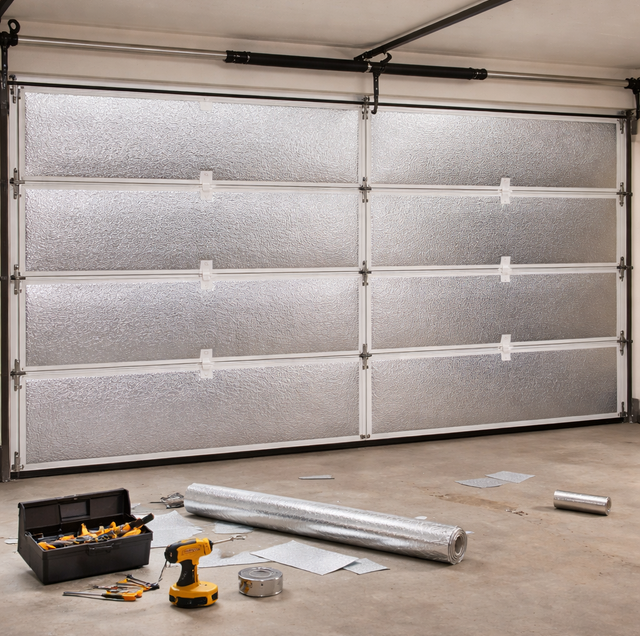
The kit is still in its shrink wrap on the garage floor. Rigid foam panels cut to section width, a bag of retainer clips, and an instruction sheet promising an afternoon of work and a cooler garage. Nothing in that box says a word about the springs above the opening.
Those springs were sized for the door as it came off the truck. Bare steel sections, nothing behind the skin, a specific weight someone matched a spring to on installation day. Every pound the kit adds is a pound that spring was never asked to carry.
Putting the panels in is a reasonable weekend job. What gets missed is the door's weight afterward.
Where the Extra Weight Comes From
Retrofit kits come in a few forms. The common ones are rigid board, expanded polystyrene, or polyisocyanurate, faced with foil or white vinyl, cut to fit inside the frame of each section and held by clips, adhesive, or friction. Others use a vinyl-faced fiberglass batt that tucks behind a retaining pin. Board kits sit at the lighter end of the range, faced batt kits at the heavier.
Across a full door, most kits add somewhere around 15 to 25 pounds, depending on size, panel thickness, and type. A double door already weighs 150 to 250 pounds depending on gauge and construction, so 25 pounds of foam is a modest share. A single door at 100 to 150 pounds feels that same 25 pounds harder, a bigger slice of a smaller number.
A twenty-five-pound kit is a bag of dog food riding on the panels, up and down, every time the door runs.
Why the Spring Was Sized for a Lighter Door
A torsion spring's torque is set once, at installation, against the door's measured weight. The spring has no way to learn the door changed afterward. It keeps delivering the same torque whether the door gained 20 pounds last weekend or not, and the difference lands in one of two places: your arms, or the opener.
What the Door Starts Doing With the Kit Installed
The change shows up first in how the door runs, not in a special test. A door that used to glide now hesitates in the first foot off the floor, since that is where every section's weight still hangs on the cables. Closing goes the other way: gravity has more help than the opener planned for, so the door runs down quicker and seats harder against the slab.
The Opener Ends Up Carrying the Difference
A residential opener is sized to overcome a few pounds of net imbalance plus the drag of rollers, hinges, and bearings. Nothing about it is built to lift a door. Hand it 20 pounds of door weight that nothing else offsets and it carries all 20.
That shows up as a motor whose pitch drops on the way up, a door that hesitates a foot above the floor, or an opener that hits its up-force limit and reverses partway. On a chain-drive unit, the load concentrates on the plastic drive gear at the output shaft, the part that strips.
The safety system takes a hit too. Force settings exist so the opener stops when the door meets resistance, and raising the up-force so a heavier door finishes its travel also increases the amount of resistance it takes to trigger that stop.
Checking Balance Before and After the Panels Go In
The useful version of this check runs twice; the first runs before you buy anything.
That disconnect-and-lift test is worth leaving to a technician rather than trying at home, since a door whose true balance you do not yet know can drop or climb once the opener is out of the picture. What you can safely note yourself, with the opener still connected and doing the work, is how a normal powered cycle behaves: whether the door labors or hesitates anywhere along its travel, whether it reverses without an obvious obstruction, and whether it seats hard at the bottom without settling in gently.
Write it down. A baseline beats "it feels heavier now," which tells a technician almost nothing.
Watch the same cycle once the kit is in and the clips are seated. A door that ran clean before and now labors, hesitates, or lands hard is telling you its weight and its counterbalance no longer agree.
Keep the kit's carton or spec sheet. The listed weight of the panels is the number a technician uses to calculate how much torque the door now needs, and it saves guessing about what went in behind the skin.
Whether the Spring Gets Adjusted or Replaced
A modest weight increase can sometimes be absorbed by the spring already on the shaft. Turn count is adjustable within limits, and a spring with margin between its rated capacity and what the door asks of it can take a few more pounds safely.
A larger increase runs out of that margin. Turns can only be added so far before the spring is worked past what its wire diameter was selected for, and a spring in that condition spends its remaining cycles closer to breaking. The answer then is a different spring: heavier wire, a different length, or a different inside diameter, chosen against the door's new weight.
Doors with extension springs stretched along the horizontal tracks follow a different rule. Those springs are built and rated for a specific door weight, identified by a painted color code on the coils. Hook and pulley position give a small adjustment range, but a weight increase from a kit is usually enough to run past that range, at which point the answer is a differently rated pair.
A door you could once lift by hand with the opener off may no longer be safe to lift that way once a kit adds weight the spring was never sized for. Leave any hands-on check and spring adjustment to a technician.
None of this means the installation went wrong. A spring visit after an insulation retrofit is the second half of the same project, and a door that behaves differently afterward is doing what added weight makes a door do.
Sequencing the Kit and the Spring Work
If the door already shows spring wear before the panels go on, the order matters. A torsion spring rated near 10,000 cycles reaches the end of that rating in roughly six years at four to five cycles a day, and one near that point is due regardless. Replacing it after the kit is in means it gets weighed and sized once, against the door's final weight.
There is a record-keeping piece too. A door with foam behind the skin no longer weighs what its model number suggests, and nothing on the outside shows it, so say what went on the door when you call.
Frequently Asked Questions
It changes where the weight lands. The top section is the one the opener arm pulls on, so filling or skipping it alone changes how the door behaves through the last stretch of travel. Uneven left-to-right filling is the worst version, since it racks the door slightly in the tracks and pushes the rollers into the track flanges. Fill whole sections and keep each one matched side to side.
Usually there is nowhere to put it. Factory-insulated steel doors are built with polystyrene board or injected polyurethane bonded between the outer and inner skins, so the section is already filled to its depth. Board added to the inside face increases thickness at the section joints, fouling hinge travel and top-roller clearance so the sections stop folding onto the horizontal track cleanly.
They need checking, separate from balancing. Once the spring matches the new weight, the opener should run the door on its original settings; if it cannot, the balance is still off. Repeat the reversal test afterward: set something a couple of inches tall in the door's path and confirm the door stops and backs off on contact. Travel limits stay put, since the kit does not change how far the door moves.
On a wide door with no reinforcement strut across the top section, added panel weight is one more load riding on the bracket the opener arm pulls from, and a door already borderline on that hardware can start showing it after a kit goes on. A bow along the header when the door is closed is the visible sign, and it is a top-section problem separate from the counterbalance, worth mentioning to a technician alongside the balance concern.
Faced fiberglass batt kits can do both. A retaining pin or clip that lets go drops the batt into the section, shifting weight downward and leaving a visible bulge in the facing. Fiberglass also picks up moisture in a damp garage, and damp insulation weighs more than the figure printed on the carton. Rigid board with clipped-in retainers stays put better.
It tends to object sooner, since a wall-mount unit's cable tension monitor watches for slack in the lift cables and halts the door the moment it finds any, and a door running heavier than its counterbalance expects can trip that monitor well before an overhead opener would show the same strain.
Book a balance check after an insulation retrofit — the door gets weighed with the kit installed and the spring matched to what it actually carries now. Arnold's Garage Door & Gates serves Fort Worth, Alvarado, and the DFW metroplex. Call Arnold: 682-337-7220.
