
Garage Door Balance Test: What Weightless Really Means
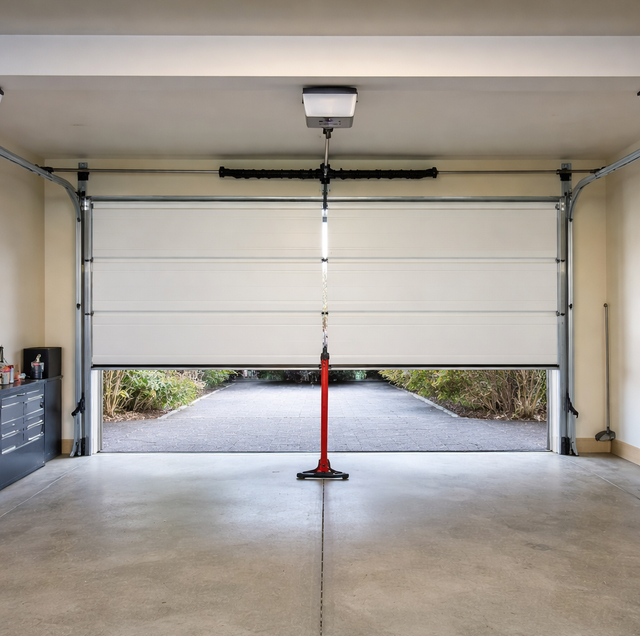
Balance is a physics word before it is a garage door word. On a sectional door, it describes a state of equilibrium: the springs above the opening store exactly enough energy to cancel the weight of the panels hanging below at every point in the travel, so the door has no strong preference for where it sits.
Equilibrium at every height is the part most homeowners never hear about, and it reduces the whole idea to a single behavior. Stop the door anywhere, and it stays there.
What Balance Actually Means on a Garage Door
Your door is heavy. A standard double door weighs 150 to 250 pounds, and none of that weight is carried by the opener. It belongs to the counterbalance: a torsion spring wound on a shaft above the opening, or extension springs along the horizontal tracks, that store energy and push back against gravity through the lift cables.
Balance is the match between those two forces. With the spring sized to the door's real weight and wound to the correct turn count, the upward torque at the cable drums almost exactly offsets the downward pull of the sections. What remains is a few pounds of difference, and those few pounds are the entire job description of your opener.
Why a Balanced Door Feels Nearly Weightless
The weightless sensation people describe on a healthy door is arithmetic: two large numbers nearly canceling. A 200-pound door on a matched spring behaves like a ten-pound door in your hands. The mass is the same. What differs is how much of it you are asked to support, because the spring supports the rest and hands it back through the cables at the rate gravity demands.
That rate is where the engineering lives. A torsion spring unwinds as the door rises and loses torque the whole way up, while the load falls off in step as the top sections roll onto the horizontal track.
Why Holding Position Matters More Than Lifting Effort
Because those two curves move together across the whole travel, equilibrium holds at every point along it, which is why "holds anywhere" is the working definition of balance.
A door can feel light at chest height and still be badly out of balance. Lifting effort samples one moment. Holding position samples the relationship across the travel, so a door that stays put at knee height, at waist height, and again near the top is reporting that torque and weight agree at several points on both curves.
A technician runs this check during routine service, with the opener disconnected so only the door's own hardware is in play, reading which direction the door prefers when nothing holds it.
When the Door Floats Upward by Itself
A door out of balance gives itself away in one of three ways: it climbs on its own, it sinks on its own, or it sits still while quietly overworking the opener. Staying put through its travel means the counterbalance is doing its job.
A door that climbs on its own carries more spring than it needs, and the surplus torque goes into lifting the door. Either it holds more winding turns than the door's weight calls for, or it is rated for a heavier door than the one it is mounted on, usually a replacement matched by appearance without ever being weighed.
Spring-heavy doors misbehave on the way down. The last foot is where you notice, since that is where the spring holds the most stored energy and pushes back hardest. The door slows near the floor, settles without committing, and can leave the bottom seal barely touching the slab. Daylight along the bottom edge and drafts point here.
A spring-heavy door disconnected from the opener can climb on its own and take fingers with it if a grip slips, or it gets away partway up. Balance is worth checking by watching the door, not by holding onto it.
The opener also has to pull that door down against a spring that wants it up, and the down-force limit that keeps the safety reverse sensitive is what usually trips first.
When the Door Drifts Downward by Itself
The opposite condition is far more common, because it is the direction wear travels. A door that sinks from where you left it is short on counterbalance by however many pounds the spring no longer offsets. Steel under repeated load takes a permanent set, so a spring well into its cycle life produces less torque at the same turn count than when new, and winding cones held by set screws alone can creep and bleed turns off quietly.
What you see mirrors the float-up case. Lift takes longer, with the hesitation near the floor where the door's full weight still hangs on the cables. Closing runs fast and lands hard. A door stopped partway creeps down where it should hold. It is the mild version of what a broken spring produces instantly.
Friction hides small balance errors: stiff rollers, dry hinges, and tight bearings resist motion, so a slightly unbalanced door can still sit where you leave it. It reads as balanced right up until the day it stops.
When the Door Fights the Opener
The third pattern goes unrecognized longest, because the door neither climbs nor sinks. It sits roughly where you leave it, and the trouble shows only in how hard the opener works.
This happens when the spring's torque curve and the door's load curve no longer track each other. A spring can deliver the right total lift at the wrong rate, which is what happens when wire size, length, and inside diameter get combined to hit a torque number on paper without being matched to how that particular door's load actually changes through its travel. The door reads close to balanced at one height and off at another, and the opener absorbs the difference wherever the mismatch is largest.
Uneven side-to-side balance does the same, since cables winding unevenly on their drums lift one side ahead of the other and press the rollers into the track flanges. What you hear, either way, is a motor whose pitch drops at the same point on every run, or a door that hesitates, then continues.
Why Balance Slips on a Door That Never Broke
Balance is set against the door as it existed on the day of the work, and both sides of that equation keep moving. The spring loses torque gradually as it fatigues, rollers and bearings wear and add drag, seasonal movement under a slab can pull an opening out of square, and the door gains weight when a wood section absorbs moisture or insulation goes in behind the panels. None of that is a failure, and it is why balance gets rechecked on a schedule.
What Poor Balance Costs the Rest of the Door
Everything downstream of the counterbalance pays for a mismatch. A spring working against a door heavier than it was sized for spends every cycle nearer its stress limit, and springs rated near 10,000 cycles reach that end early when overloaded.
The opener pays next, in current, in heat, and in wear on the plastic drive gear carrying the whole output. Cables and drums pay through uneven wind, and the end bearing plates wear faster. The safety system operates invisibly, since raising force settings to push an unbalanced door through its travel reduces the opener's sensitivity to anything in its path.
Balance gets confirmed and corrected during a maintenance visit, using the door's own hardware, which is why it belongs on a routine tune-up rather than an emergency call.
Frequently Asked Questions
Net torque on the torsion shaft sits near zero there, with spring torque and door weight canceling. Perfect cancellation does not exist in a real assembly, so slight settle is normal. Many doors are set a touch heavy at the closed position so the last inches seat the bottom seal.
Yes, and it happens more than people expect. A spring near the end of its cycle life can still produce the correct torque today while showing pitting, coating loss, or a coil count that no longer falls within a safe working range, so a technician may recommend replacing it before a failure, even though the door currently holds position everywhere it should. Balance tells you what the spring is doing right now, not how many cycles it has left.
Mostly through the door and the hardware. Cold thickens the grease in rollers and bearings, adding drag that makes a slightly light door look balanced on a winter morning. Wood and composite doors gain weight in a wet stretch, so they vary more by season than steel.
Directly, and DC openers show the strain sooner than older AC units. A DC motor throttles its own output to compensate for extra load automatically, so it quietly draws more current every cycle on an unbalanced door without ever tripping an obvious fault, while an older AC unit tends to announce the same overload as a stall or a blown thermal fuse. Either way, the wear lands first on the gear train.
Often, yes. Some technicians wind a hair past dead-even so the door settles firmly into the closed position, since a door that is perfectly neutral everywhere can also sit a fraction light where the weatherstrip needs the most pressure. That small bias is a deliberate choice made at the winding cone.
No, and that is worth knowing before buying one. The opener does not carry the door's weight, so replacing it leaves the counterbalance in place. What changes is what you perceive, since soft start and soft stop smooth over the hesitation an unbalanced door would show.
Maintenance Tip: Book a maintenance tune-up that includes a balance check — a technician confirms the door holds position through its travel, then corrects spring tension, cable wind, and drag before the opener starts paying for it. Arnold's Garage Door & Gates serves Fort Worth, Alvarado, and the DFW metroplex. Call Arnold: 682-337-7220.
