
Why Garage Door Problems Follow a Big Temperature Swing
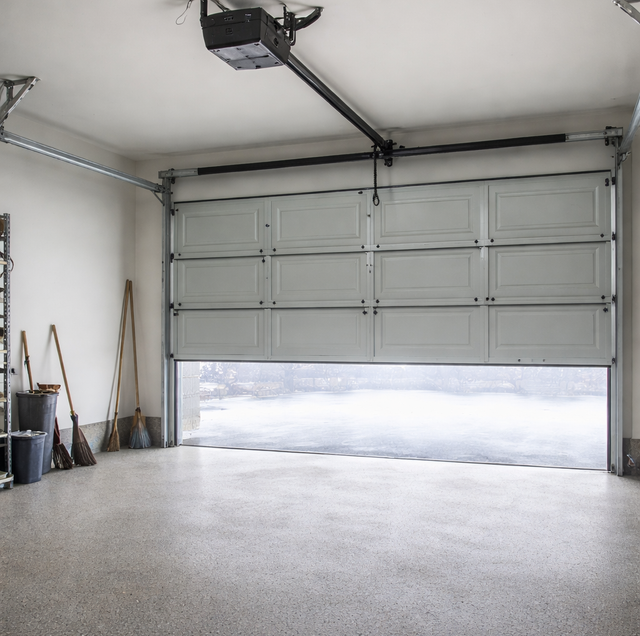
The thermometer on the workbench shelf read 96 one afternoon. A front came through overnight, and by morning it read 58. A few days later you back out, and the door hesitates on the way up, scrapes along the left track, and lands harder than it used to. Nothing changed except how fast the weather turned.
A door that misbehaves right after a move like that signals something specific: several materials bolted into one opening changed size at once, at different rates, and the clearances they share were squeezed.
Why a Swing Hurts More Than a Steady Season
A garage is rarely conditioned space, so it follows the outdoor temperature closely, and everything in that opening reaches the new one at its own pace.
Thin steel gets there first. A track, a hinge leaf, a roller stem, and a lag bolt are small masses with a lot of surface area, so they follow the air within minutes. The wood jamb behind the track takes hours, and the slab takes a day or more. For that stretch, the assembly sits at several temperatures at once, and the clearances set with every part matched stop existing. Give those same parts three weeks of gradual autumn to make the identical trip, and they arrive together, and nothing binds.
What Steel Does as the Thermometer Moves
Steel changes length with temperature, and a door assembly has a lot of feet. Across an eight-foot horizontal track run, a hundred-degree change moves the steel something under a sixteenth of an inch. Roller stems, hinge barrels, and track slots work in fractions of that.
So what you notice first is contact. A roller with a whisper of side play now rubs the track wall through the curve, and a vertical track that cannot contract freely along its bolted length takes up the difference as a slight bow between brackets.
Fasteners are the second effect and the more serious of the two. A bolt sheds clamp load every time its joint cools and regains it when the joint warms, all alongside the vibration of a door running twice a day, which is the ordinary way a fastener walks loose.
The spring anchor bracket's lag screws bite into the wood header, which shrinks across the grain in hard, cold conditions. A bracket low on grip can lose it, and that hardware carries the whole wound spring. A shifted bracket means stop and call.
Cold and spring failure is a subject of its own, so one paragraph covers it. Spring steel is less forgiving cold; a residential torsion spring is built to roughly 10,000 cycles, and a coil already carrying a fatigue crack tends to finish it on the first freezing morning.
Rubber Seals at Both Ends of the Range
The bottom seal is a rubber or thermoplastic bulb that must remain pliable enough to flatten on a slab that is never perfectly level.
Cold stiffens it. A seal that had shaped itself to the concrete goes rigid, stops filling the low spots, and leaves a strip of daylight at one end. It also stops absorbing the last inch of travel, so the door lands harder than the opener's down-force setting learned.
Heat does the reverse. A warm bulb softens, grips the slab, and turns tacky, and breaking that grip at the start of the lift can take more force than the opener expects, enough to trip the force sensor and send the door back down before it clears the floor.
Why Grease Changes Character in Heat and Cold
Viscosity is a function of temperature, which makes grease the most weather-dependent part of the door. In a cold snap, the grease in roller bearings, shaft end bearings, and the opener's rail and gearbox thickens. The motor spends part of its output shearing stiff lubricant before any reaches the door, which is why the first cycle of a cold morning is the slowest and the second one is better.
Heat runs it backward. Thin, hot oil migrates out of bearings and off the rail, leaving them closer to dry each summer, and the residue oxidizes into a varnish that is sticky warm and hard cold. A lithium or silicone garage door lubricant maintains its consistency over a much wider range.
Wood and Composite Panels Move With the Weather
Wood responds more to moisture than to heat, and the two often travel together, since a cold front pushes dry air in behind it and a heat spike brings humidity ahead of it.
A wood or composite door that takes on moisture expands at the stiles and edges and gets tight in the opening. It also gains weight, and since springs are sized to a door's measured weight, several extra pounds of absorbed moisture make it feel heavy throughout the lift. When the air dries out, joints open at the rails and stiles, panel inserts rattle, and hinge screws biting into end grain lose their grip.
Insulated steel sections bow slightly toward the cooler side when the sun-facing skin runs far hotter than the inner one, and years of that open the section seams.
What the Opener Feels During a Swing
The opener reduces all of the above to one number: how much force this cycle took against the force it learned. Stiff grease, a tacky seal, a rubbing roller, and a heavier panel all land in that same reading, and the unit stops short going up or reverses off the floor going down.
Battery capacity also drops in cold, so a remote that works at noon can fail at six in the morning. And the safety sensors sit inches off the floor on brackets fixed to the track or the jamb, where the beam needs to drift only a fraction of a degree to miss the receiver.
After a fast swing, look before you listen. A proud screw head, sawdust below a bracket, or daylight under one end of the bottom seal shows up before the door starts making noise about it.
Most of This Corrects Itself
Most swing symptoms fade as the assembly equalizes over the following week, and a door that quiets back down on its own confirms nothing was actually damaged. What doesn't fade is the signal worth acting on: a bracket that stayed loose, a seal that never recovered its shape, or a sensor that keeps missing after the sun angle changes. Those don't wait for the next swing before they get fixed.
Frequently Asked Questions
Speed matters less than what crosses the dew point. A swing that pushes a warm, humid stretch down through the dew point overnight leaves condensation beaded on the torsion shaft and the cable drums, a moisture exposure a slow seasonal change never produces. A dry swing of the same size passes with less to show for it, even when the number of degrees is larger. Watch the forecast for a front behind rain more than the number on the thermometer.
Manufacturers publish an operating range for residential openers in the manual, and most unheated garages rarely leave it. The practical limits arrive first, and they are mechanical: thickened gearbox and rail grease, a sluggish wall console, and a backup battery that will not hold a charge in cold.
They help on the panel and only slightly on everything else. An insulated section holds a much smaller temperature difference across its thickness, so it bows less in the sun and keeps the garage's own swing smaller and slower. Tracks, rollers, bearings, springs, and the opener still see whatever the garage does, and an insulated door is heavier, so added drag reaches the force limit sooner.
Two things, both outside the counterbalance. Run a hand along the bottom seal for splits, hardened stretches, or sections that no longer flatten on the slab, and replace them once they lose their shape. After a hard freeze, check that the seal is making full contact across the slab. A low spot that is too stiff to fill in the cold leaves a gap. Springs, cables, drums, bottom brackets, and anything needing lubricant belong to a technician.
Yes, by different physics. Steel reacts directly to temperature, moves a predictable distance, and returns to where it started, so its problems are dimensional and land on fasteners and clearances. Wood reacts mainly to humidity, moves slowly, and changes weight as it moves. That last part separates them: because the shift plays out over months, a spring adjustment set correctly for one season on a wood door can already be light or heavy by the next season.
It can, and it is a common call after a front. Two seasonal look-alikes are worth ruling out first: a low winter sun shining into the receiving eye, and condensation on the lenses after a cold night followed by a warm morning. If neither explains it, the bracket has shifted enough with the steel and the slab to walk the beam off the receiver, which is a realignment rather than a sensor replacement.
Have a door that changed behavior after a temperature swing checked — a technician weighs and rebalances the door, inspects header hardware and track fasteners, services bearings and seals with a lubricant rated for the range, and resets the opener's force, travel, and sensor alignment. Arnold's Garage Door & Gates serves Fort Worth, Alvarado, and the DFW metroplex. Call Arnold: 682-337-7220.
