
Garage Door Spring Replacement: What Happens, Step by Step
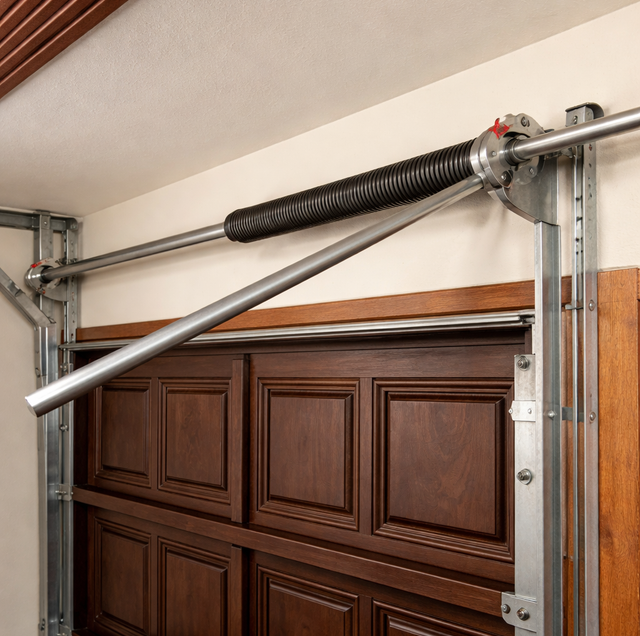
A spring replacement call spends its opening stretch on everything except the spring. A tape measure comes out. Locking pliers go on the vertical track. Somebody stands under the header with a flashlight, reading a cone and coils that already ran their last cycle. From the driveway, that can look like stalling, and it is the part of the visit that decides whether the rest of it holds.
Torsion hardware is a system, and the spring is only the component that failed most loudly. The order of operations matters as much as the parts. Each step exists because the one after it is unsafe or inaccurate without it.
What Gets Read Before Anything Comes Apart
The first questions are about the door itself. How wide the opening is, how tall, how many springs sit on the shaft above it, and which way each one is wound. Whether the sections are single-layer steel, insulated, or wood. Whether the opener got run after the break, and how many times.
That last question matters more than most people expect. A door pushed against a dead counterbalance can drag a lift cable off its drum, round the teeth on a nylon drive gear, or crease the top section at the opener bracket. Any of that turns a spring swap into a longer list, better found early than late.
Then comes the door's weight, because a torsion spring is specified in pounds before it is specified in inches. Wire diameter, inside diameter, wound length, and wind direction all follow from that reading and the door's height.
The Door Gets Secured Before the First Tool Comes Out
Nothing gets loosened while the door can still move. The door comes down flat to the concrete and stays there for the whole job. The trolley gets disconnected while the door is already down, so no raised panel is hanging on a mechanism about to lose its counterbalance.
Then locking pliers or a C-clamp go on each vertical track, seated just above a roller. On a door with a snapped spring, that looks pointless, since the door has no ambition to go anywhere. The clamps are not for now. They are for the last twenty minutes of the visit, when fresh springs are wound tight, and the door wants to climb the opening the moment anything releases it.
The ladder is set to one side of the shaft, off the cone's line. Working directly under a spring that is about to be loaded is how a slip becomes an injury.
Taking the Tension Out of the Old Springs
A wound torsion spring keeps its energy at the winding cone on the outer end, and that cone is clamped to the shaft by two set screws. Those screws are the only thing preventing stored torque from transferring to a cone that can spin on the shaft, which is why they are the last thing touched.
A steel winding bar goes fully into one of the cone holes first, and the technician takes the spring's load on that bar. Only then do the set screws come out. From there, the spring comes down a quarter turn at a time: the bar gets pressed down, a second bar goes into the hole that rotates into reach, the first bar comes out, and the cycle repeats until the coils go slack.
A spring that snapped has already dumped most of its energy into the shaft and the walls, and the half still clamped in the winding cone can hold a turn or more of wind. It gets treated as loaded regardless, because nothing visible from the floor says which broken spring has something left in it.
With both springs slack, the rest comes apart quickly. The drum set screws back off, and the cables come out of the grooves, carrying nothing now. One end bearing plate gets loosened, the shaft slides out far enough to clear the coils, and the old springs come off the end.
While the shaft is out, the door is held by two track clamps and its own weight, and the lift cables hang slack off the drums. Keep the opening clear of people and vehicles until the new springs are wound.
What Gets Inspected While the Shaft Is Apart
This window does not reopen until someone takes the tension off a second time, which is why a spring call is also a hardware call.
The shaft gets spun by hand first, checking each end bearing plate and the center bearing above the anchor bracket for grit, a low groan, or side play, any of which means a bearing that has been quietly machining the shaft it rides on. The same spin indicates whether the shaft itself rolls true or carries a bow that warrants flagging separately. From there the hands move outward to the drums, reading each groove for burrs and flat spots and the flange for hairline cracks. The cables get run through fingers next, since frays start in two predictable places, at the bottom bracket where the cable takes its sharpest turn and at the drum where it stacks against itself, and one broken strand standing proud of the lay condemns the cable on the spot.
Last comes the hardware anchoring everything to the building: lag screws checked for grip in the header wood, end plates checked for sitting flat against the jamb, and roller stems and hinge holes checked for elongation from a door fighting its own track.
Sizing the New Set and Getting It Back on the Shaft
The replacement is chosen based on the measured weight and the door height, and for a two-spring door, both go on together. Pairing a fresh spring with one that has most of its fatigue life behind it puts the two out of step within a year or so.
The cycle rating is set here as well. A standard residential spring is built to survive roughly 10,000 open-and-close cycles, which an average household spends down over several years of ordinary use. Heavier use is why higher-rated springs exist, and that conversation belongs before the parts come off the truck.
The springs slide onto the shaft with their stationary cones facing in, and those cones bolt to the center anchor bracket. Each spring's wind has to match the side of the bracket it lands on. The shaft goes back into the end bearing plates, the drums slide on, and the cables get seated in the drum grooves and drawn tight with the door still down, so both sides carry equal tension before either drum set screw is tightened. A drum set a half wrap off from its partner is what makes a door start climbing crooked weeks later.
Winding to the Number the Door's Weight Calls For
Winding runs the first step backward, and it ends with more stored energy in the room than at any other moment of the visit. Bars go back in the cone, the spring comes up in quarter turns, and the count is tied to the door's height, since the spring has to deliver its torque across exactly the travel the cables wrap onto the drums.
At full wind, the spring has grown longer along the shaft. The cone gets tapped outward to take up that length before the set screws go down, so they land on bare shaft. They get tightened to the spring maker's spec: too light and the cone creeps under load, too hard and they leave a divot that complicates the next set.
The clamps stay in the track through all of it.
The Balance Check Comes Before the Opener Goes Back On
With the trolley still disconnected, the technician moves the door by hand and stops it at three or four heights through the travel. A door matched to its springs sits still at every one of them. A door that sinks from mid-travel is short on wind or short on spring. A door that lifts off on its own is carrying too much. Turns get added or removed at the cone until it holds, which is why the winding bars stay out until then.
Only then does the trolley reconnect. The opener runs several full cycles while its travel limits get reset for the new closed position, since a properly sprung door lands a little differently than a tired one did. Force gets set in both directions against the door's real effort, the photo eyes get checked for alignment, and the reversal test gets run with a length of two-by-four laid flat in the door's path.
Stand where you can see both bottom corners during the first powered cycle after the work. Corners that leave the concrete together and land together confirm that the cables were taken up evenly on both drums.
What the Door Should Do the Next Morning
Most of this fits within an hour on an accessible door with the right springs on hand; longer when the shaft has to come all the way out or when worn hardware turns up. What you notice afterward is mostly an absence: no bang at the top of travel, no hesitation in the first foot, and no bounce as the seal meets concrete.
Worth a callback in the first week: a rhythmic tick at one end of the shaft, one corner lagging the other, daylight along the closed seal, or an opener that reverses near the floor. Caught early, all four are adjustments.
The other thing to keep is whatever got flagged while the shaft was apart. New springs go up against bearings, drums, cables, and rollers the same age as the pair that just failed, and that list is what the door will ask for next.
Frequently Asked Questions
Garage access is what matters, plus someone available at the end. The final steps run the opener through several cycles, reset its travel limits, and test the reversal, which needs the interior wall control. With a keypad or a side door left open, much of the work happens without anyone there.
No. The motor unit, rail, and arm stay bolted where they are. The only piece that moves is the trolley, released from the carriage so the door can be worked by hand. On most units, it re-engages the next time the opener runs a full cycle, and the arm never leaves the top section bracket.
The spring work does not, and it can be finished during an outage. The opener settings cannot. Travel limits, force adjustment, photo-eye alignment, and the obstruction reversal test all need the unit powered, so a door re-sprung without power gets those set on a follow-up.
They come attached. A torsion spring ships as an assembly with the stationary cone pressed onto one end and the winding cone on the other, so both are new steel every time. The parts that stay are the shaft, the center bracket, the end bearing plates, and the drums.
Cars out, a clear strip of floor under the door about the depth of a stepladder, and room at both ends of the shaft. Shelving crowding an end bearing plate is the usual obstacle, since the shaft has to slide sideways far enough to clear a coil.
It gets shown to you before anything is decided. A grinding bearing, a frayed cable, or a cracked drum flange is only accessible when the tension is off, so it gets handled during that window or waits for the next one. Nothing gets swapped without asking first.
Get a broken spring replaced by the person who actually does the work — the door gets weighed, the springs get sized to it, and the balance and force settings get verified before the visit ends. Arnold's Garage Door & Gates serves Fort Worth, Alvarado, and the DFW metroplex. Call Arnold: 682-337-7220.
