
Garage Door Motor Runs, but the Door Won't Move? What's Wrong
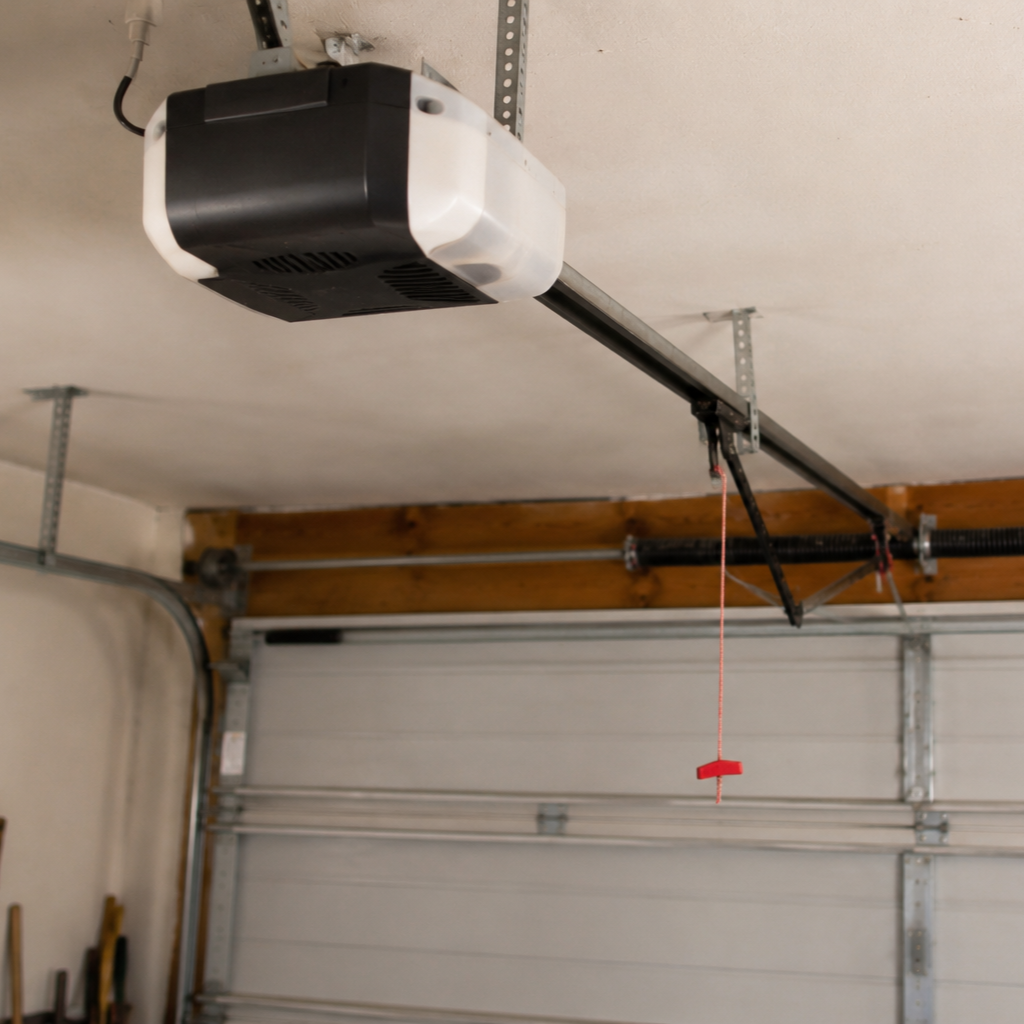
The opener sounds exactly like it always does. The motor whirs, the light clicks on, the chain or belt slides along the rail, and the door sits there. Or it crawls up a few inches, groans, and gives up.
That mismatch is actually good news and bad news at once. The good news is your opener has power, and the motor turns so that you can cross the electrical stuff off the list. The bad news is the problem lives between the motor and the door, or in the door itself, and a couple of the causes are jobs you do not want to touch by hand.
What "Runs but Won't Move" Actually Tells You
Think of the opener as three separate things pretending to be one. There is the motor that spins, the trolley and rail that carry that spin to the door, and the door with its springs and cables that actually has to lift. When the motor runs, but the door stays put, the break is downstream of the motor. Your job, before anyone comes out, is to narrow down which link in that chain to let go.
Here is how the common ones sort out.
| What you notice | Most likely cause | First thing to check |
|---|---|---|
| Chain or belt moves, door doesn't move at all | Trolley disconnected from the door | Is the emergency-release cord pulled? |
| Motor strains, door lifts a few inches then stops | Broken spring overloading the opener | Look for a gap in the spring coil |
| Motor hums or grinds, chain barely moves | Stripped drive gear or worn sprocket | Listen for grinding at the motor head |
| Door lifts crooked, one side lags | Snapped cable on one side | Look for a loose cable down the wall |
| Motor runs full travel, door never moved | Trolley disengaged or door locked | Check the manual lock and the release |
The Trolley May Have Come Disconnected
Start here, because this one is free to fix. Every opener has an emergency release, a red cord that disconnects the door from the trolley so you can work the door by hand during a power outage. Bump that cord, or pull it and forget to reconnect, and the motor will happily run the trolley back and forth on the rail while the door never moves. The chain glides, the door ignores it.
It is the garage-door version of pedaling a bike with the chain off. Everything spins, nothing drives.
A Broken Spring Is Overloading the Motor
If the motor strains and the door only manages a few inches before quitting, the opener is trying to lift a weight it was never built for. That points at a spring. The springs above the door carry almost all of its 150 to 350 pounds, and the opener only nudges a door the springs have already made nearly weightless. Take the spring out of the equation, and that half-horsepower motor is suddenly asked to deadlift the whole door.
You will usually see a one- to two-inch gap in the spring coil above the door when this is the cause. Do not keep pressing the button to test it. Every attempt drags the full door weight through the opener and can cook the motor or strip its gears, which turns one repair into two.
A Stripped Gear or a Snapped Cable
Two more failures live in this space. The first is inside the opener itself: a plastic main drive gear that has worn down its teeth. When that happens, the motor spins and hums, but the chain or belt barely twitches, because the gear can no longer grab. The second is a lift cable that snapped or jumped its drum on one side. With one cable gone, the opener pulls the good side up while the dead side hangs, so the door lifts crooked and stalls. Both need a technician, and both get worse the more you cycle the door.
The Door Itself May Be Stuck
Sometimes the opener and its parts are fine, and the door is the holdout. A manual slide lock that got thrown will pin the door shut while the opener strains against it. So will an out-of-balance door, a bottom seal frozen or stuck to the slab, or a travel-and-force setting that drifted until the opener thinks the door has hit an obstruction and stops short. These are the gentler causes, and a good diagnosis rules them in or out fast before anyone touches a spring.
Telling the Cheap Fix From the Real One
The whole point of standing there for two minutes before you call is to sort the free fixes from the real ones. A disengaged trolley or a thrown lock costs you nothing and takes a minute. A broken spring, a snapped cable, or a stripped gear requires a genuine repair that calls for the right parts and trained hands. The one move that helps in every case is the same: stop running the opener once you know the door will not go. Forcing it is what turns a slipped trolley into a burned-out motor.
Frequently Asked Questions
My garage door opener runs, but the door won't budge at all — what's first?
Check the emergency-release cord. If it has been pulled, the trolley is disconnected from the door, so the motor moves the chain while the door stays still. Reconnect it by pulling the cord toward the motor until it clicks, then run the opener once to let it re-latch. If the door still will not move, the trouble is a spring, a cable, or the opener's gear.
Why does the motor hum but the chain barely moves?
That usually means the main drive gear inside the opener has stripped its teeth. The motor spins but can no longer turn the chain or belt with any force. It is a common failure on older openers and, in most cases, requires replacing the gear, not the whole unit.
Can a broken spring make the opener act like it's the motor's fault?
Yes, and it fools a lot of people. When a spring breaks, the opener still runs, so it looks like an opener problem. But the motor is just straining against the door’s full weight, with no spring to help. Look for a gap in the spring above the door before you blame the opener.
Is it safe to keep hitting the button to see if it catches?
No. Each try makes the motor drag the door's full weight or fight whatever is jamming it, which can strip the gear, burn the motor, or bend the top of the door. Once you know the door will not open normally, stop and diagnose it.
The door moves a few inches and reverses — is that the same problem?
Not quite. A door that lifts and then reverses is usually a travel-or-force setting or a safety-sensor issue, not a dead spring or trolley. A door that strains up a few inches and then stops is more likely to be carrying too much weight due to a broken spring. The distance and the behavior tell the tech which way to look.
Could it just be the remote or the wall button?
If the motor runs when you press the button, the remote and receiver are doing their job, so the signal is not your problem. The failure is mechanical, somewhere between the motor and the door. Remote and keypad issues show up as nothing happening at all, not as a motor that runs without moving the door.
Reading the Symptom Before You Call
A motor that runs while the door stands still is not a single problem; it is a short list of them, ranging from a thirty-second reconnect to a real repair. The trick is to look before you force anything: is the release cord pulled, is there a gap in the spring, does a cable hang loose, does the motor grind? Two minutes of looking tells a technician most of what they need and keeps a cheap fix from turning into an expensive one.
