
Garage Door Cable Snapped or Off the Drum? What It Means
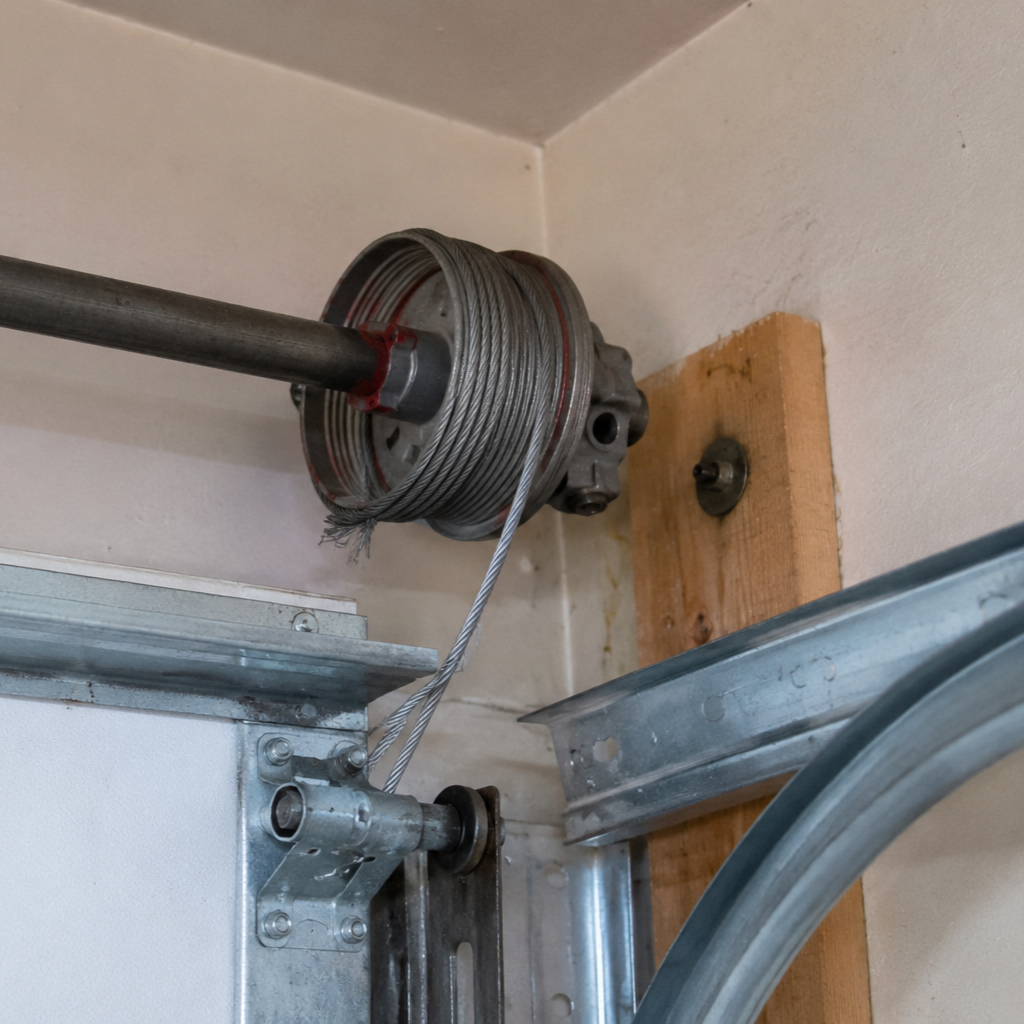
You go to raise the door, and it lurches up crooked, one side lagging behind the other. Down the wall, a thin steel cable that should be taut is hanging slack, or worse, coiled in a loose nest on the garage floor.
A loose or snapped lift cable looks like a small thing, a piece of wire you could almost tie back on. It is not. That cable was carrying a share of the door's full weight under real tension, and the fact that it let go usually means something else in the system already did.
What the Cable Actually Does
Your door has two lift cables, one on each side, running from a bracket at the bottom corner of the door up to a grooved drum at the top. When the spring winds and unwinds, those drums turn, winding and unwinding the cables like thread on a spool, and that is what actually raises and lowers the door. The spring applies the force; the cables deliver it evenly to the two bottom corners.
That is the part people miss. The cable is not a safety strap sitting there doing nothing. It is the link that translates the spring's stored energy into lift, the bowstring between the spring and the door. Lose one cable, and one corner of the door loses its connection to the spring entirely.
Why a Cable Comes Off the Drum or Snaps
Cables fail in a few predictable ways, and the reason matters because it tells you what else to check.
The most common is fraying at the bottom. The lower few inches of a cable sit closest to the slab, where water pools after you hose the garage, where a damp floor breathes moisture, and where humidity collects. Steel there rusts, and the strands corrode, and a cable is only a bundle of thin wires twisted together. As the outer strands rust and break, the survivors carry more of the load until the whole thing parts, like a rope shedding threads, finally giving way.
The second is a spring failure. When a spring breaks, the sudden loss of tension can let the cable go slack and jump right off its drum, or the violent unloading can snap it outright. This is why a broken spring and a dumped cable so often show up together on the same door.
The third is misalignment. If the door has drifted off track or a drum has worn or loosened, the cable stops winding cleanly into its groove. It rubs against the wrong surface or laps over itself, wears a flat spot, and frays until it fails. A cable that keeps failing in the same spot is telling you the drum or the track, not just the cable, needs attention.
What You'll See and Hear
A snapped cable announces itself. Sometimes there is a sharp twang or a bang as it lets go, then the door drops or hangs crooked because one corner is no longer supported. More often, you notice the door lifting unevenly, one side trailing, the bottom sitting at an angle. Look, and you will find the cable frayed, hanging loose down the wall, pooled on the floor, or spun off the drum at the top. Nearly always, one side sits lower than the other.
Why It's Rarely Just the Cable
Occasionally, a cable has slipped its drum without any real damage, and that one can be re-seated. But a cable that is frayed or snapped is past saving and gets replaced, not repaired. Here is the honest part most guides skip. A cable rarely fails on its own, and replacing only the broken one is how you end up calling twice. If a spring dumped the cable, the spring needs attention, too. If a worn drum shreds it, a fresh cable on the same drum frays again. If the door went off track and chewed the cable, the track and rollers are part of the repair. And the surviving cable on the other side has the same age, rust, and wear as the one that just failed, so replacing cables in pairs is the honest call, not an upsell.
A real fix means controlling the spring tension, replacing both cables, checking the drums and springs that drive them, and confirming the door is square and balanced before it is handed back to you. Do that, and the door runs even and quietly. Swap one cable and hope, and you will be reading this again by fall.
Frequently Asked Questions
Can I keep using the door until I get the cable fixed?
It is not a good idea. With one cable gone, the door is supported on only one corner, so it can lift crooked, jam in the track, or drop unexpectedly. Every cycle also risks pulling the door off track and bending hardware. Leave it down and wait for the repair rather than forcing it a few more times.
Is a frayed cable an emergency, or can it wait?
A fray is a warning, not a failure yet, but it does not get better. Those broken strands mean the cable is weaker and closer to snapping under load, which can happen mid-lift and slam or jam the door. It is worth handling soon rather than waiting for it to part on its own.
Why did my cable snap right after the spring broke?
Because the two are linked. When the spring lets go, the cable can lose its tension and jump the drum, or the sudden shock can break it outright. A broken spring and a failed cable on the same day is a common pairing, not a coincidence, which is why a tech checks both together.
Do both cables really need to be replaced if only one broke?
On most doors, yes, and for the same reason you replace springs in pairs. The intact cable shares the age, rust, and wear of the one that failed and is usually next in line. Replacing both keeps the door balanced and saves you a second trip when the other one goes.
What makes cables rust down here?
The bottom of the cable lives near the slab, where moisture collects from washing the car, humidity, and a damp floor. Steel strands corrode from the bottom up, which is exactly where most cables fail. Keeping the garage floor dry and the door hardware maintained slows it down, but a cable near the concrete is always the first to feel moisture.
Could a bad cable be why my door is crooked?
Very likely. A cable that has snapped or slipped its drum drops the corner it was holding, so the door lifts and sits at an angle. If your door started lifting lopsided, a failed or loose cable is one of the first things to check, along with the spring and the track on that side.
One Cable Is a Two-Cable Job
A loose or broken lift cable is small in size and large in meaning. It carried real tension; it usually failed because a spring, a drum, or the track failed first, and its twin on the other side is not far behind. The lasting repair controls the tension, replaces both cables, fixes whatever started it, and leaves the door balanced. Anything less delays the next breakdown by a few weeks.
