
Garage Door Off Track on One Side? Why It Happens
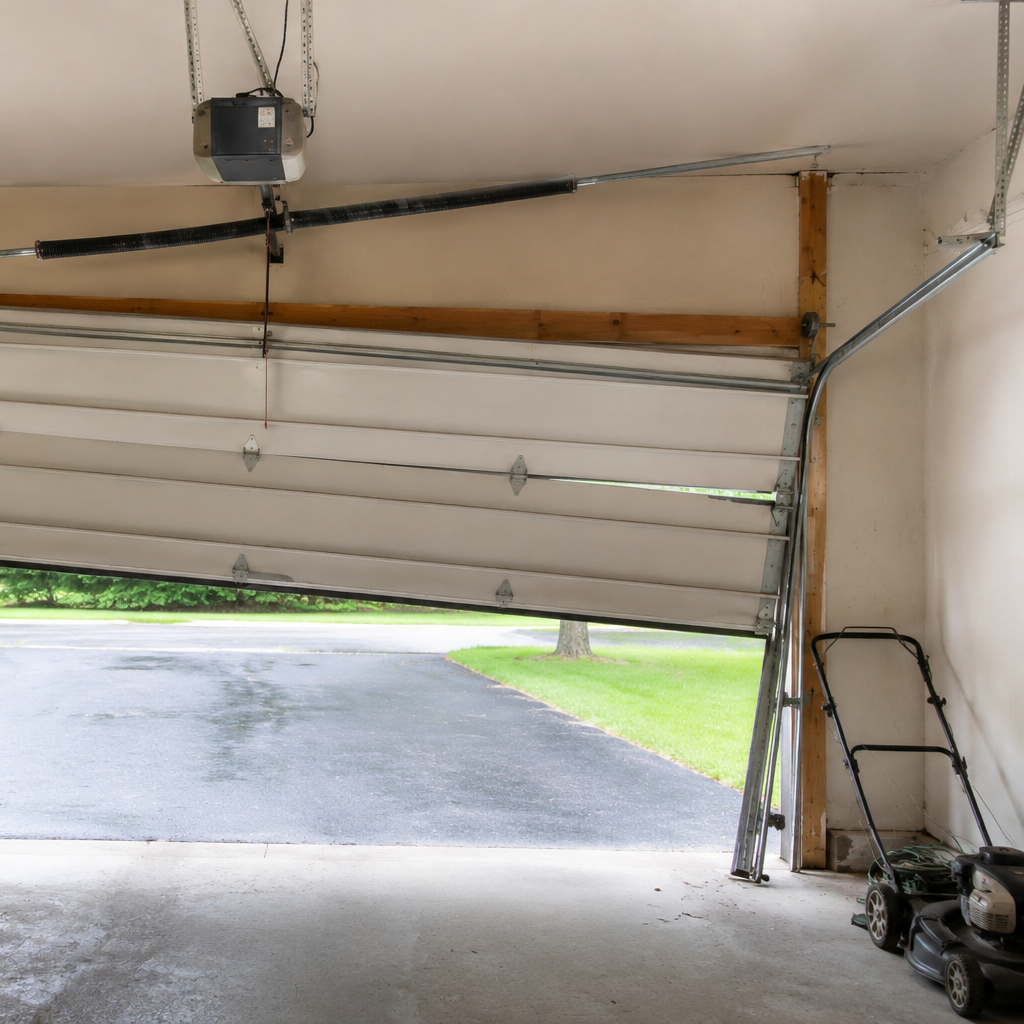
One corner of the door is riding lower than the other. There is a wedge of daylight where the door should meet the frame, a roller dangling off its rail, and the whole thing looks like it is leaning against the opening instead of hanging in it.
A door that has jumped its track on one side is not a mystery, and it is rarely random. Something upstream let go or shifted, the door lost its even support, and one row of rollers walked out of the channel. Figure out what moved first, and the fix makes sense.
What "Off Track" Actually Means
Look at the vertical metal channels on each side of the opening. Small wheels, the rollers, ride inside those channels and keep the door captured to the wall as it travels up and over. As long as both sides carry the same load and the tracks stay straight and square, the rollers stay in their groove. Knock any of that out of balance, and a roller pops free, the way a train wheel jumps a rail when the track ahead of it is bent, or the load shifts hard to one side. Once one roller is out, the door tilts, and that tilt pulls the next roller out.
So the track itself is rarely the root of the problem. The track is where the damage shows up. The cause is usually whatever stopped the door from holding square.
A Broken Cable or Spring Pulls It Out of Line
This is the most common way a door goes out of track on one side. The springs and cables are what hold the two bottom corners of the door up evenly. When a cable snaps or a spring breaks, one side loses its lift while the other keeps pulling. The opener, or gravity, then drags the door up or down crooked, and the slack side's rollers are yanked sideways out of the channel. If your door went off track the same day it started sounding or moving wrong, look at the springs and cables first.
Something Hit the Door
The blunt one. A car eased forward a foot too far, a trailer backed into it, and a delivery cart clipped the bottom section. It does not take much of a hit to bend a bottom bracket or knock a roller out of line, and a door that gets tapped while it is partway open is especially easy to derail. If the trouble started right after a bump rather than after a strange noise, the impact is your cause and the fix is mechanical, not spring-related.
Worn Rollers and Loose Track Brackets
Age does this one quietly. Cheap steel rollers dry out, lose their bearings, and start to wobble in the channel instead of rolling clean. Meanwhile, the brackets that bolt the track to the wall loosen a little with each cycle due to years of vibration. Give it enough time, and a wobbling roller on a slightly loose, slightly splayed track finds the edge of the channel and climbs right out. This is the failure that seems to happen for no reason, on an ordinary day, with no bang and no bump.
Something in the Track Got in the Way
The simplest cause is also the easiest to overlook. A stray bolt, a hardened clod of dirt, a small stone kicked into the vertical channel, or a bent bit of the track itself gives a roller something to climb. On the next pass, the roller rides up and over that obstruction and pops out of the channel. The tell is a door that catches or jumps at the same spot every time, usually low near the floor, and a quick look up the track often shows the culprit sitting right there.
When the House Itself Moves the Frame
Around here, there is one more cause worth knowing, and most companies never mention it. A lot of North Texas sits on expansive Blackland clay, the kind of soil that swells when it is wet and shrinks when it dries out. As the slab under your garage rises and settles with the seasons, the framed opening to which the tracks are bolted can pull slightly out of square. The tracks that lined up perfectly at install slowly stop being parallel, and a door that used to glide starts to bind, rub one side, and eventually shoulder a roller out of the channel. The tell is a door that got harder and harder to run over months, not one that failed in a single event.
| Cause | What you'd notice |
|---|---|
| Broken cable or spring | Trouble started with a noise or a sudden crooked lift |
| Impact from a vehicle | Off track right after a bump, bent bottom bracket |
| Worn rollers, loose brackets | Gradual, on an ordinary day, older hardware |
| Object or debris in the track | Door catches or jumps at the same spot each time |
| Frame pulled out of square | Slowly got harder to run over months, binds one side |
Why Running It to "Reset" It Backfires
The instinct is to hit the button and hope the door climbs back into place. It will not. With the door already off the channel, the opener drags it against the bent track and the loose rollers, further bending the track, creasing the door section, and often snapping the other cable in the process. A five-minute realignment turns into a bent-track-and-two-panels repair. The door is off balance and partly unsupported, so it can also drop or twist while you are standing under it. Once a roller is out, stop cycling the door and leave it where it sits.
Putting a Door Back on Track
A proper repair is more than lifting the rollers back into the groove. The technician releases the tension safely, seats the rollers, then checks everything that let go: straightens or replaces bent track, swaps cracked rollers, inspects the cables and springs that started the whole thing, and re-squares the track to the opening as it sits today, not as it sat ten years ago. That last step is the one that matters most on a shifting slab. Set the tracks to the frame's current shape, and the door glides again. Skip it, and the same roller finds the same edge in a few months.
Frequently Asked Questions
Can I push the roller back into the track myself?
It is tempting, but risky. The door is under spring tension and partly unsupported when it is off track, so it can shift or drop while your hands are in the path. Even if you get the roller back in, you have not fixed what pushed it out, so it will happen again. This is a job where the tension needs to be controlled first.
Why did only one side come off?
Because whatever failed usually fails on one side first. A single cable snaps, one spring breaks, one corner takes the hit, or one track splays before the other. That leaves the door supported unevenly, and the weak side is the one whose rollers leave the channel. A door off track on one side is really a door being held up on only one side.
Is an off-track door going to fall on my car?
It can shift or drop, especially if you keep trying to move it. An off-track door has lost some of its support and its balance, so it is no longer safely captured to the wall. Keep people and vehicles out from under it until it is repaired, and do not run the opener to move it clear.
My door was fine yesterday and off track today with no bump. How?
That is the signature of worn rollers on a loosening track, or a frame that has slowly pulled out of square on shifting soil. Both build up invisibly for months, then reach the point where a roller finally leaves the channel on an ordinary morning. Nothing dramatic happened that day; the day was just the finish line.
Will fixing the track alone solve it?
Only if the track was the whole problem, which is rare. If a cable, spring, or squared-up frame caused it, straightening the track without addressing the cause just resets the clock. A repair that lasts fixes the track and the reason the door left it.
Does the soil around here really move a garage frame?
Yes, more than people expect. Expansive clay swelling and shrinking with moisture is the same force that cracks driveways and racks door frames across the region. It works slowly, but a garage opening that drifts even slightly out of square changes how the door tracks, and over time, that is enough to push a roller out.
Straight, Square, and Back in the Channel
A door off track on one side is the visible end of a chain that started somewhere else: a snapped cable, a worn roller, a bumped bracket, or a frame the ground pushed out of square. Lifting the roller back in without finding that starting point just buys you a few months. The repair that holds reseats the door, replaces what is damaged, and squares the tracks to the opening, the way it sits now.
