
Signs Your Garage Door Spring Is Going Bad Before It Snaps
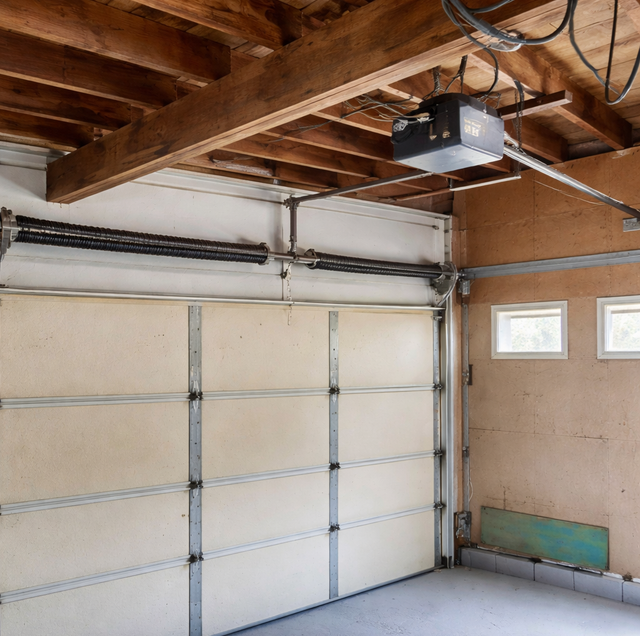
A torsion spring rarely breaks without warning. It breaks without the warning being recognized, and those are two different problems.
The bang everyone remembers is the last event in a sequence that started months earlier. A crack began walking around one coil, the spring's stored torque began falling off, and the door started behaving a little differently than it had for years. None of that is loud. All of it is noticeable once you know which changes the door uses to tell you.
Why a Weakening Spring Changes How the Door Behaves
A torsion spring is a counterweight. Wound tight on the shaft above the opening, it stores enough torque to offset nearly the whole weight of the door, so the opener only has to overcome friction and get things moving. A residential sectional door commonly runs well over a hundred pounds, and the opener is sized only to move a few pounds of leftover imbalance on top of that counterbalance.
Fatigue eats into that counterweight from two directions. Every cycle flexes the outer surface of the wire, and a crack starting at a nick or rust pit creeps forward a fraction of a hair per cycle, thereby shrinking the cross-section of the steel carrying the load. Separately, a spring approaching the end of its cycle rating takes a permanent set, relaxing enough that the same winding turns produce less torque than they did when it was new.
Either way, the counterweight stops matching the door, and the difference moves into the opener, the cables, the rollers, and the sounds the assembly makes. That is why the warning signs arrive in a rough order instead of all at once.
The Earliest Sign: A Door That Sounds Different
Sound is the first channel a failing spring uses, and the useful signal is change, not volume.
Early on, listen for a dry creak or groan in the first foot of travel. Torsion coils rub against one another as the spring unwinds, and while the factory coating is intact, that contact stays quiet. As the coating thins and the steel roughens, coil against coil becomes audible, usually a low grinding or rope-under-strain sound coming from above the opening rather than from the opener rail.
A sharp tick or ping at the exact moment the door starts moving belongs in the same category. That is coils breaking loose from each other after sitting overnight under load. Once is nothing. Every morning for a month is a pattern.
Still Early: What the Steel Itself Shows
Healthy oil-tempered spring wire is uniformly black and slightly oily, and a flashlight from a safe distance shows when it stops looking that way. The coating goes dull and starts flaking, orange bloom appears in patches on the underside of the coils where condensation settles overnight, and fine orange dust collects on the floor beneath the shaft. Pitting does not have to eat through the wire to end a spring. Each pit is a stress riser where a crack begins, so a pitted spring reaches the end of its fatigue life well short of the cycles it was rated for.
The winding cones are worth a look in the same pass. They are held to the shaft by set screws and friction alone, and if a cone has crept, the spring body drifts along the shaft, tension bleeds off, and the door quietly loses balance over the following weeks.
Weeks Out: Travel Time and Opener Strain Change
The next stage shows up in motion. Lift is where a torsion spring works hardest, because the door's whole weight hangs on the cables for the first few feet, before the top sections roll onto the horizontal track and the load drops off. A weakened spring shows the shortfall there first.
What you see is a door taking longer to reach the top than it used to, with the hesitation concentrated near the floor. The opener may start, bog down, then recover once the door is halfway up. On a chain drive, the chain slaps the rail as tension comes and goes; on a belt drive, the motor pitch drops through the heavy part of the lift.
Closing tells the same story backward. A properly counterweighted door settles onto the slab. A door on a weak spring covers the last two feet faster than it should and lands hard enough that you hear the bottom seal slap.
The opener light also dims for a beat when the motor loads up, because it is drawing more current than the circuit is used to supplying. And a door that used to stay put when the opener stopped mid-travel now creeps downward rather than holding its position.
Watch a suspect door from outside its path, remote in hand, never standing under the opening. When a wound spring lets go, its stored energy unloads through the lift cables, and a cable can whip off the drum first.
Days Out: Signs the Spring Is Nearly Done
Late-stage signs are harder to explain away. A sharp bang or pop mid-travel while the door keeps working is the one most often talked out of. That sound comes from a crack in the wire advancing far enough to release stored energy in a step rather than along a smooth curve. The door still running afterward is not evidence that nothing happened.
An opener that reverses partway up belongs here too. Openers monitor force and back the door off when it crosses a set threshold, so a door reversing at the same point two or three days running is reporting a load the spring is no longer carrying. Turning the force setting up buries that report and pushes the difference onto the opener's gear and sprocket.
Cycle counts explain the runway. Standard springs on builder-grade doors are rated for about 10,000 cycles, where one cycle is a full open plus a full close, and a household running the door six times a day spends roughly 2,000 of those cycles a year.
The calendar has a say as well. A spring already this far along tends to pick the first hard freeze of the season to finish, since cold steel is less forgiving of a crack that is already there.
How to Watch and Listen Without Touching Anything
Every sign above can be checked with your hands nowhere near the hardware. Run the door through one full open and one full close while you watch from the same safe position described above. Listen for where a noise starts rather than what it sounds like: above the opening points to the spring, shaft, or bearings; along the rail, the opener; at the jambs, rollers or track. Then compare the timing of the lift against the timing of the drop, since those behave like mirror images on a balanced door.
The winding cones are the exception. A wound torsion spring holds a large amount of stored energy, and adding or releasing turns takes matched steel winding bars and someone who does it regularly. Looking and listening are yours. Turning is not.
What the Warning Window Is Actually Worth
Catching a spring during the warning stage changes what the repair includes. A spring replaced while it is still intact leaves the rest of the assembly alone. A spring that snaps drops the door faster than the drums are built to pay cable out, which is how cables jump their grooves, how a bottom section gets bent, and how a roller gets shoved out of track.
The window buys choice as well. A planned replacement is when the door is weighed, the spring is matched to that measured weight, and someone asks how many times a day the door actually runs and whether a higher cycle rating fits the household. A spring that lets go at six in the morning with a car parked behind it narrows that conversation to getting the door open.
Frequently Asked Questions
By counting turns. Required winding turns come from door height and drum size, and a standard seven-foot door on four-inch drums typically lands near seven and a half turns. If the spring measures right for the door but holds fewer turns than it should, tension has bled off at the cones. If the turn count is right and the door still runs heavy, the wire itself has relaxed.
Often. The torsion shaft rides in an end bearing plate at each side and usually a center bearing at the spring anchor bracket. Bearing noise runs continuously and stays localized at one point on the shaft, while coil noise pulses and comes from the length of the spring body. A dry bearing also lets the shaft wobble, which winds the cables unevenly.
It quiets them, which is the hazard. A light garage door lubricant, a lithium- or silicone-based spray, cuts coil-to-coil friction and can silence a creaking spring for several weeks. It does nothing about a crack already growing inside the wire, and a spring that goes quiet while staying slow is still failing on schedule.
They warn differently. Extension springs stretch along the horizontal tracks, and their main tell is elongation: coils that no longer sit closed against each other with the door open mean the spring has taken a permanent set. Their first audible warning often comes from the pulleys, since a seizing sheave squeals under load. The safety containment cable threaded through each spring deserves a look at the same visit.
Yes, on a different clock. Cycle fatigue slows when the door sits, but corrosion runs on the calendar regardless, and a spring in a humid garage sharing space with a water heater or a washer pits either way. Corrosion is the dominant factor on a lightly used door, since cycle fatigue accumulates only when the door runs.
To a point. DC openers with soft start and soft stop ramp the motor in and out of travel, smoothing over the hesitation a weak spring would otherwise put into the lift, and their force reserve absorbs more imbalance before the safety reverse trips. On those doors, the sign shifts from sound to timing: the run takes several seconds longer than it once did while the door looks normal the whole way up.
Book a spring inspection before the break — a technician weighs the door, measures the spring, and checks tension, coil condition, cables, and bearings while the assembly is still intact. Arnold's Garage Door & Gates serves Fort Worth, Alvarado, and the DFW metroplex. Call Arnold: 682-337-7220.
