
Garage Door Inspection Before Selling: What Gets Missed
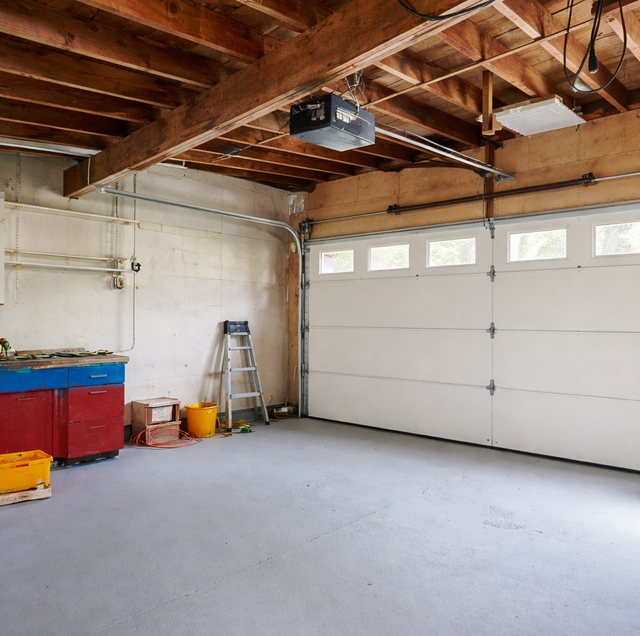
By the time a house goes on the market, attention has gone to paint, light fixtures, and the front entry. The garage door gets used more than any of them. Over a listing period, it runs for showings, an inspection, a contractor visit or two, and eventually the movers.
A door that opens on the first try during a showing proves the system still functions. It says nothing about how much life is left in the springs doing the lifting. The gap between those two facts is where a garage door turns into a line item on a repair request or a delay the week of closing.
Why a Working Door Says Little About the Springs
A sectional garage door is the heaviest moving thing in most houses. A standard double door weighs roughly 150 to 250 pounds, and the opener was never sized to lift that much. The springs are. A torsion spring winds tension onto a steel shaft above the opening as the door comes down and gives it back on the way up; an extension system does the same job with springs stretched along the horizontal tracks.
Springs are rated in cycles, where one cycle is a full open plus a full close. Builder-grade springs commonly carry a rating near 10,000 cycles, and a household running the door four or five times a day works through that in about six years. That life gets spent invisibly. Fatigue accumulates inside the wire where nothing shows, and the spring keeps lifting at close to full strength until the crack finishes walking through it.
So a demonstration during a showing settles less than it appears to. The door will keep moving right up to the morning it stops. An opener whose force settings were nudged up at some point hides a weakening spring even longer, since the motor covers the shortfall until it can no longer.
Where a Spring Problem Lands When You Are Selling
A listing period concentrates use. A door averaging four cycles a day can pick up dozens in one busy week of showings, plus the inspector, the appraiser, and whoever comes to touch up trim. If a spring was already deep into its rated life, the weeks on the market are the weeks most likely to finish it.
Where the failure lands decides how big a problem it becomes. A spring that breaks between showings costs you a service call and an afternoon. One that breaks down with a car inside, within an hour of a showing, costs you the showing. A door that has gone quietly out of balance without breaking tends to surface in the buyer's inspection report as an opener straining, a door that will not hold position, or a door that closes hard. Once it is written down, it stops being your repair on your schedule and becomes a negotiated item on someone else's.
The practical move is a check before listing photos. A door that opens smoothly, closes without a slam, and reverses correctly is a normal expectation in a sale, and meeting it early keeps it off the repair list. It also helps to know what you have before a buyer asks: one spring or two, whether either has been replaced, and whether you still have the invoice.
What Buyers Can Look at Before the Option Period Ends
The garage door is the largest moving mechanical assembly in the house you are buying. It weighs more than any appliance inside and is easy to walk past because it works on the way in.
At a showing, you can learn a fair amount without touching anything. Count the springs on the shaft above the opening: one long coil centered over the door, or two meeting at a center bracket. Look at the steel with a flashlight from a few feet back. New oil-tempered wire is uniformly black and faintly oily, while a spring that has been up there for years goes dull, flakes its coating, and blooms orange on the coil undersides. A visible gap in the middle of a coil means the spring is already broken.
Then listen to one full cycle. A door that hesitates near the floor, lands with a slap, or drifts down after the opener stops is reporting a counterbalance that no longer matches the door.
What you cannot judge from a walk-through is remaining cycle life, which is the piece worth a specialist's eyes during the inspection window.
Do not test an unfamiliar door by hand at a showing. It means disconnecting the opener and moving the door manually, putting real weight on whoever is holding it when the spring condition is unknown. Leave that check to a technician.
What a Pre-Listing or Pre-Closing Garage Door Check Covers
A tune-up visit looks at the parts a general home inspection notes but does not measure. It complements that inspection and does not replace it.
Balance: The opener comes off the door, and the door gets moved by hand and stopped at a few heights. A counterbalanced door stays where it is put. One that drifts down or shoots up indicates a spring that no longer matches the door's weight, which is the most useful reading during the visit.
Spring condition and sizing: Wire diameter, inside diameter, and length get measured against what the door actually weighs, which is how you learn whether the spring up there was correct to begin with. The coils get checked for pitting, rust, spacing, and any cone that has crept along the shaft.
Cables, drums, and hardware: Lift cables get looked at where frays start, at the bottom bracket and the drum grooves, along with end bearings, rollers, hinges, track alignment, and the bolts holding all of it.
Opener safety settings: Force and travel limits are rechecked against the door's actual effort, photo-eyes are aligned, and the reversal test with an obstruction is run.
What comes back is a plain accounting of what is worn and what has time left.
When to Schedule It Around the Sale
Sellers get the most out of a check before listing photos, while there is room to handle whatever turns up without a clock running. Buyers should aim for the same week as the general inspection so the findings arrive together. If a house sits vacant before closing, run the door through a full cycle at the walk-through.
Frequently Asked Questions
Most inspectors run the door from the wall button and the remote, confirm it reverses on an obstruction, check that photo-eyes are present and mounted low, inspect panels and weatherseal for damage, and verify that the manual release works. What falls outside that scope is weighing the door, measuring the spring against that weight, or estimating cycle life. A door that runs correctly gets noted as operating as intended, which is accurate and still leaves the counterbalance unexamined. Standards vary, so ask your inspector what their garage pass includes.
Look for a dated service sticker on the jamb, the door face, or the opener housing, the closest thing to a record most houses have. The door's manufacturer label inside a panel gives a build date, and a spring that looks as old as the door is probably original, carrying the household's full cycle history. Coil coating condition adds a rough second opinion, but stickers and labels are the closer read since coating can be misleading on a spring stored somewhere shaded or humid. All of it is approximate, and measuring tells you more.
Yes, and it is worth putting in writing. On a two-spring door, both go in at the same time and cycle identically, so they age together. If one looks newer, or differs in length or wire thickness, someone replaced a single broken spring and left its partner in place. That survivor carries the door's entire history and is usually the next to go. A mismatched pair also raises a sizing question, since two different springs may not split the load as designed.
Mechanically, a door that has already shown a symptom does not quiet back down on its own, and every showing adds cycles. Fixing it before photos keeps the door working through the listing period and out of the inspection report, where it becomes a negotiation on the buyer's timeline. What belongs on disclosure paperwork varies by state and brokerage, so ask your agent about local norms.
The door stops moving, and a vehicle parked inside is not coming out until a technician arrives. The final walk-through is typically where a buyer confirms the property matches what was agreed to, so a door that worked at inspection and does not now is worth flagging to your agent right away rather than waiting to see if it comes up. A spring replacement is usually a single visit, so the fastest path is to get it repaired and hand over the invoice.
Anything that records what is on the door. The spring invoice is the most valuable one, especially if it lists wire size, inside diameter, length, and cycle rating, since that lets the next technician arrive with the correct part rather than measuring first. Add the opener model and manual, plus any remaining warranty. Two housekeeping items belong in the handoff: give the buyer the keypad code so they can change it, and have any remotes not handed over cleared from the opener's memory.
Book a garage door tune-up before you list or before your option period closes — a maintenance visit covers spring condition and sizing, door balance, cables, hardware, and opener safety settings. Arnold's Garage Door & Gates serves Fort Worth, Alvarado, and the DFW metroplex. Call Arnold: 682-337-7220.
