
Galvanized or Oil-Tempered Garage Door Springs? How to Choose
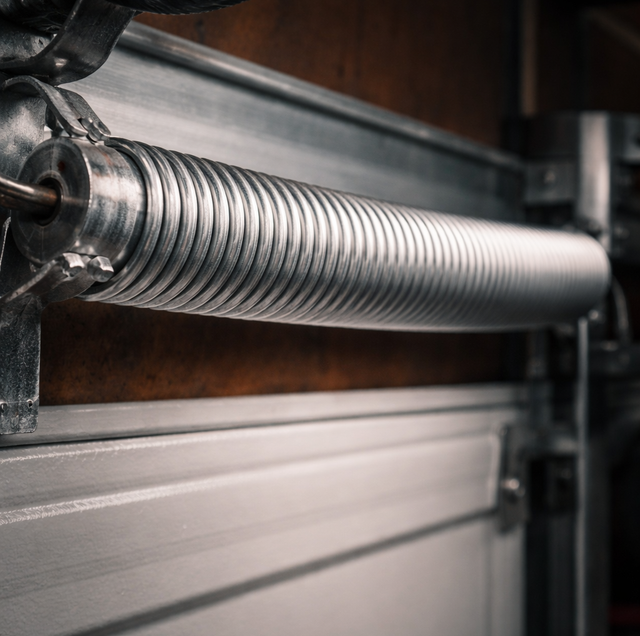
Pull the coating off two failed springs side by side, and the difference is obvious before you even measure them. One shows a dull orange bloom spreading between the coils. The other, taken from a garage down the street, still looks factory-fresh where the rust ate through the first spring entirely. Same wire diameter, same length, same 10,000-cycle rating on the tag. What differed was never the steel underneath.
Put one in a damp garage and the other in a dry one, and they will not reach the end of their lives the same way. The choice that decides that was made at the wire mill, not in the garage. Oil-tempered and galvanized describe what happened to the steel before it ever took the shape of a coil, and that upstream decision determines whether rust becomes part of the story at all. Both are standard residential stock, and both hold up when matched to their conditions.
What Oil-Tempered Spring Wire Actually Is
High-carbon steel wire is drawn to its finished diameter, run through a furnace, quenched in oil, and tempered back to a specific hardness. The furnace and the quench are what you are buying; the coil shape is the cheap part. That process is what allows the wire to twist through thousands of full cycles and return to shape without taking a permanent set during the first winding.
The oil quench gives the material its name and its color. Wire coming off that line carries a thin dark film, left in place as a first layer of moisture protection. Spring makers commonly specify this family as oil-tempered wire, and it remains the default residential torsion spring.
The film sits on top of the steel, something like wax on a car body: effective while intact, less so once handling, a tool scrape, or months of condensation have thinned it. It offers nothing where it is missing.
What a Zinc Coating Adds to the Wire
Galvanizing applies zinc to steel, either by drawing the wire through molten zinc or by electroplating it in a bath. The result reads dull silver-gray and dry.
Zinc protects in two ways at once. It covers the steel, which is the obvious part. What matters more is what happens where the cover gets broken. Zinc is less noble than steel, so with moisture present it gives up its own metal first, and steel exposed at a scratch stays protected as long as zinc remains nearby to sacrifice itself. A nick in an oil film exposes bare steel, leaving nothing to defend it. A nick in zinc exposes steel too, but the surrounding coating keeps that spot from rusting.
That is the advantage in a damp garage. Corrosion on a spring starts as a pit, and a pit is a stress riser: a notch where a fatigue crack has somewhere to begin.
Where Galvanized and Oil-Tempered Wire Behave Differently
Cycle life comes mostly from the wire itself: its cleanliness, its heat treatment, its surface condition, and how hard it is worked for its size. The finish touches the surface-condition part and leaves the rest alone.
Galvanizing can shift that picture through the application process. Hot-dip galvanizing involves heat, and heat applied to a heat-treated part must be controlled, or it affects the temper. Electroplating raises a separate concern: plating high-strength steel can drive hydrogen into the metal, and hydrogen embrittlement is a recognized failure mode in high-strength fasteners and springs. Makers address it with post-plating bake cycles, and the consistency of that varies by supplier.
The word galvanized on a parts list also covers two products. Some galvanized springs are oil-tempered wire zinc-plated afterward. Others start as hard-drawn wire that was zinc-coated, a different base material with different fatigue behavior. A spring labeled only galvanized does not tell you which it is.
Never wire-brush, sand, or scrape rust from a wound spring. The spring holds hundreds of pounds of stored torque, and abrasives cut through whatever finish is left, leaving exactly the kind of notch a fatigue crack starts in.
The Garage Matters More Than the Coating
Corrosion runs on time-of-wetness, the hours per year that liquid water actually sits on the steel. A garage that traps humidity for long stretches, rather than one that gets a single wet day and dries out, is what actually shortens a spring's working life, and an uninsulated slab stays cold enough that humid air condenses on it and on any nearby metal.
The geometry of a wound spring works against it. Water forming on top of the coils runs down and collects in the gaps between them, lingering long after every surface you can see has dried, which is why the undersides of the coils are usually the worst-corroded part of a spring that looks fine from the front.
In a tight, conditioned garage, an oil-tempered spring runs out its full cycle rating with corrosion never entering the picture. A double door cycling 4 to 5 times a day reaches its 10,000-cycle rating in roughly 6 years. In a damp garage, the same spring pits long before that count comes near.
Powder-Coated Springs Belong in the Same Conversation
A third finish sits beside the other two: powder-coated or painted springs, where a bonded polymer layer is baked onto the wire. It is thicker and tougher than an oil film and does not thin the way oil does.
It works on a different principle from zinc. A polymer layer is a barrier that keeps water off the steel until something chips it. Once chipped, the exposed steel is on its own, like a bare spot in an oil film. Zinc keeps protecting a small break in itself. Paint does not.
Which Approach Fits Which Garage
An attached, reasonably tight garage with no water heater and no standing humidity is the environment oil-tempered wire was designed around. It is the most common residential spring for good reasons: stocked in every size, well characterized, and good for its full rated life when kept lubricated and dry.
A garage that stays damp changes the picture. A detached, unconditioned building; one that sits open in wet weather; one sharing space with a water heater or laundry; a shop where anything gets washed down; a building near salt air. Those conditions use up the oil film first, and that is where zinc earns its place.
Finish gets decided alongside size, and size is settled by what the door actually weighs: somewhere around 150 to 250 pounds for a typical double, 100 to 150 for a single.
White powder on a zinc spring is the coating doing its job, not a reason to call. Orange or red staining in that same spot means the zinc is breached and the steel underneath is what is actually corroding.
What a Coating Cannot Fix
A finish changes how fast the surface degrades. It does not change what the spring is asked to do. A spring-sized light for its door works harder on every cycle, and no coating slows fatigue caused by overload. A door that binds because the opening has shifted out of square drags its springs into friction they were never sized for, and zinc does nothing there.
Which is the honest limit of this comparison. Once you know which of the two galvanized products is on the shaft, coating is mostly a corrosion decision; sizing, balance, and cycle count settle the rest. A well-matched finish keeps a correctly sized spring from dying early of rust. It cannot rescue one that was wrong for the door the day it went up.
Frequently Asked Questions
It should not. Both springs share the load and are wound to matching turns, so they need to agree on wire size, inside diameter, length, and material. Mismatched finishes age at different rates, one side gives out first, and the door lifts unevenly before anything breaks.
Stainless spring wire exists and shows up in car wash bays, food processing plants, and coastal buildings where salt air is constant. It is not simply a stronger upgrade: stainless spring wire has lower tensile and fatigue strength than oil-tempered carbon wire at the same diameter, so matching a door's weight in stainless requires a heavier or longer spring, and it is a specialty item with limited stock in residential sizes.
Two different things appear on a zinc surface. A white or gray powdery film is zinc oxide, sometimes called white rust, and it is the coating doing its job. Orange or red staining indicates that the zinc has been breached there and the underlying steel is corroding.
No. Galvanizing and powder coating are factory processes applied before the spring is wound and set. Paint brushed onto a spring in place bridges the gaps between coils, hides a break a flashlight would otherwise reveal, and traps moisture underneath where it cannot dry.
The materials come from the same family; their specifications differ. Commercial doors run many more cycles per day than a house door, so higher cycle ratings are common, and those buildings more often see wash-down, chemical exposure, or bays standing open to weather. Corrosion-resistant finishes follow.
Rarely on the wire itself, and finish is not what a cone stamp tells you. What a stamped or color-coded cone marks, where suppliers use one, is wire size or wind direction, never the coating. Telling galvanized from oil-tempered by eye, using the color and texture cues covered above, is more reliable than looking for a marking that usually is not there.
Book a spring inspection — a technician can identify what is on your door now, read its condition, and match a replacement to the door's weight and the conditions in your garage. Arnold's Garage Door & Gates serves Fort Worth, Alvarado, and the DFW metroplex. Call Arnold: 682-337-7220.
