
New Garage Door, Old Opener — Do They Still Match Up
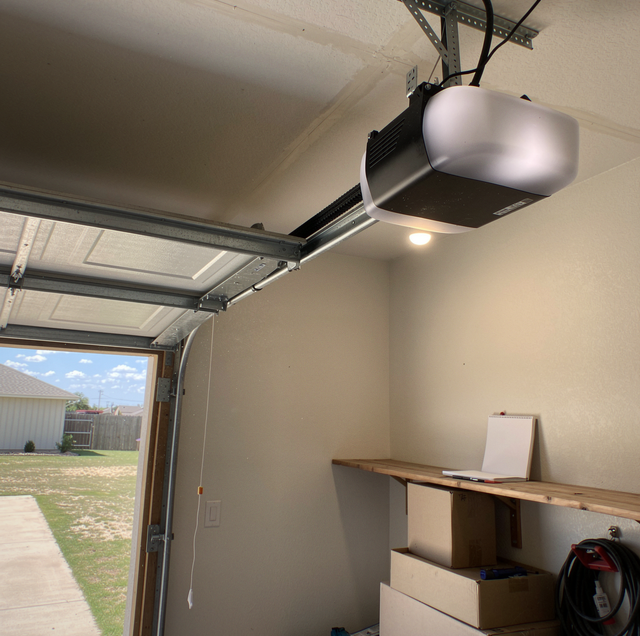
Most people choosing a new garage door spend real time on it. They compare panel styles, weigh insulated construction against a bare steel option, decide on window inserts or a smooth face, and place the order weeks before anything shows up on a truck. The door gets picked the way a door should get picked: for how it looks against the house and what it does for the temperature inside the garage.
The opener rarely gets that kind of attention. It's the thing already bolted to the ceiling, working, and nobody thinks to ask whether it belongs with the door coming to replace the one it currently lifts. That question tends to surface on install day instead, when the crew is standing in the garage with the new door, and somebody has to decide, on the spot, whether the old opener goes back up or gets swapped too. Left alone, the default answer is always the same: keep what's already there.
That default is fine when it happens to be right. It's a problem when it isn't, because by install day the door is already purchased, delivered, and half out of its packaging, which is a bad time to discover that the ceiling-mounted opener and the door about to hang from it don't actually fit together. Everything that determines whether an opener carries over is knowable before the order, not just in hindsight once the new door is up.
Before ordering, note your current opener's model number and check whether its rail length and horsepower rating are printed on the powerhead housing or in its manual, so you have hard numbers instead of guesses.
A Heavier Door Changes What the Motor Has to Lift
A single-layer steel door and an insulated, two-layer door of the same size are not close in weight. The foam core itself adds little, but the second skin of steel does, and that swap often happens when a homeowner wants a garage or the space above it to hold heat better than a bare panel ever will. The opener on the ceiling was matched to the old door's weight when it went in, and that match is exactly what changes once a heavier door takes the old one's place. A new door also arrives with its own counterbalance, a spring system sized to that door rather than the one it replaces, so what the opener has been working against shifts along with everything else. Whether the new weight falls within the opener's rated capacity or exceeds it is a horsepower question in its own right. Picking the horsepower class for a heavier door, whether an opener can be added to a door that has always run by hand, how a builder pairs door and opener in a single order, and whether one opener or two needs replacing on a two-door garage are each their own decision.
A Taller Door or New Track Radius Can Outrun the Rail
Door height and track radius are matched decisions, and either one moving changes what happens at the top of the door's run. A taller replacement door in the same rough opening requires more vertical travel than the door it replaces, so the trolley has to cover a greater distance to reach fully open. Track radius, the curve where the horizontal track bends up into the vertical section, can change too when a low-headroom door or a different lift style replaces a standard one. Both of those shifts where full-open actually sits, and an opener's rail, together with its stored travel setting, only cover a certain range before a bigger change simply runs past it.
The Arm's Mounting Point Moves with a New Top Section
The opener's arm doesn't attach to the door at a random spot. It bolts to a bracket on the top section, or, on some designs, the section just below it, and that bracket needs to sit on a structure the panel can take a pull from without denting or flexing under load. A new door's top section is a different piece of steel, sometimes a different gauge, sometimes shaped differently around a window cutout or a raised panel design, and the mounting point that worked on the old door may not be in the same place on the new one. When a top section can't take that pull on its own, whoever hangs the new door addresses it at the panel itself, not inside the opener.
An Aging Opener Inherits a Second Door's Worth of Work
A garage door and the opener mounted above it don't age at the same rate. The door is mostly steel or wood riding on hinges and rollers, built to hold up through decades of ordinary weather and use, while the opener carries a motor, a logic board, and drive components that wear against how often the door cycles. Putting a new door under an opener that's already most of the way through its working life asks that unit to start a second door's worth of service on top of whatever it already has behind it. An opener installed alongside a home's original door, especially in a house that's had the same owner for years, is the one most likely to be worth a second look before it inherits a door it was never matched to in the first place.
Photo Eyes Get Re-Set Against the New Door Either Way
Photo eye sensors mount near the floor on each side of the track, aimed across the opening at each other, and they don't care whether the opener above them is new or years old. A new door means new track sections going in at floor level, and the sensors doing their job on the old hardware come down along with it. Whoever installs the new door has to re-mount and re-aim those sensors against the new track no matter what happens with the opener, which is worth knowing going in so it isn't mistaken for a sign that the opener itself needs replacing.
Settling These Questions Only Gets Harder After the Door Is Hanging
Every item on that list- rated capacity against the new panel's weight, rail length against a taller door's added travel, and the top section's shape against where the arm needs to mount- is simple to confirm before an order goes in and considerably more work to untangle once the door is already hanging in the opening. A free on-site estimate is the point in the process where all three can be checked against the specific door under consideration, ahead of a delivery truck rather than after one. A new door's warranty covers the door itself, the parts, and the workmanship of the installation, and it doesn't extend backward to cover whatever opener is already bolted to the ceiling, so the opener side of the pairing still has to be settled on its own. Settling it before the order goes in is the one point in the whole process where changing course costs nothing more than a phone call.
Frequently Asked Questions
Not usually. The powerhead's mounting bracket ties directly into the ceiling joists, a connection sized to the opener's own weight rather than the door's, so a heavier or taller replacement door doesn't call for a different ceiling mount on its own. What can change is where that bracket needs to sit: a taller door pushes the trolley's resting position further back, which occasionally means moving the bracket a few inches rather than rebuilding the mount.
Some door panels carry a printed weight or gauge rating on an inside label, which provides a direct way to compare the new door's actual weight with what the current opener is rated to lift, rather than estimating by eye. Not every manufacturer includes that label, so its absence isn't proof either way. When the label isn't there, someone has to weigh or measure the door directly to make the comparison.
A reinforcement strut and a wind-load strut are both horizontal braces bolted across a panel, but they answer different problems. A wind-load strut spans multiple panels for storm resistance, while the strut tied to the opener exists only to give its arm a solid point to pull against. Whether a new door needs one depends on how that top section is built, not on whether the old door had one.
It can. Openers ship with more than one drawbar style: a straight arm for garages with normal ceiling clearance above the door, and a bent, low-headroom arm for garages where that clearance is tight. A new door's track profile, especially a move from a standard lift to a low-headroom configuration, can call for switching from one arm style to the other even when the opener itself stays exactly where it is.
Yes, in almost every case. A remote or keypad pairs with the receiver built into the opener's powerhead, not with the door itself, so replacing the door doesn't affect that pairing at all. The one exception is if the opener gets swapped out in the same visit, since a different powerhead means a different receiver for anything that talks to it.
Sometimes. Photo eye sensors mount either directly to the track itself or to separate stamped brackets bolted near the floor, and the bracket style already in place doesn't always fit a new door's track hardware. When that happens, the fix is a different bracket rather than just re-aiming the sensors that are already mounted there.
Settle the opener question before your new door is ordered — a free on-site estimate checks the opener against the door you're considering, so nothing gets decided by default on install day. Arnold's Garage Door & Gates serves Fort Worth, Alvarado, and the DFW metroplex. Call Arnold: 682-337-7220.
