
LiftMaster vs Genie vs. Chamberlain — What Separates Them
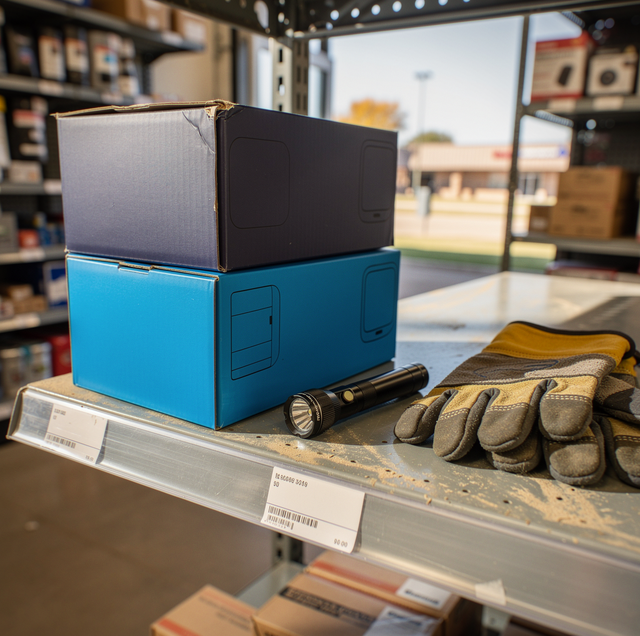
Three boxes sit on a shelf: one printed with LiftMaster's mark, one in Chamberlain's blue, one carrying Genie's own logo. Pull the spec sheets, and a fact jumps out that none of the boxes mention: two of those three names come from the same manufacturer, the same engineering team, and in many cases the same parts bin. The Genie box comes from somewhere else entirely. None of that settles which opener belongs over a specific door, but it changes what brand loyalty even means once you're standing in front of the shelf.
How the Product Lines Are Split
LiftMaster and Chamberlain aren't competitors. They're the professional and retail names of one manufacturer, built to reach two different buyers through two different doors. LiftMaster moves primarily through professional dealers and installers, who handle the unit, install it, and remain reachable if something's off after the sale. Chamberlain carries the same engineering heritage but sits on a store shelf, boxed for a homeowner to carry out and install without a technician in the driveway.
Genie sits apart from that arrangement. It's built by its own manufacturer, with its own decisions on motor design, logic boards, and control protocol, so nothing in a Genie unit traces back to the LiftMaster or Chamberlain platform. That doesn't make it better or worse on its own; it means this isn't really a three-way comparison of separate companies. It's one company's split strategy against a separate manufacturer's full line.
| Brand | Manufacturer Relationship | Typical Sales Channel |
|---|---|---|
| LiftMaster | Professional line; same parent manufacturer as Chamberlain | Primarily professional dealers and installers |
| Chamberlain | Retail line; same parent manufacturer as LiftMaster | Home improvement retailers and online |
| Genie | Separate manufacturer, unrelated to Chamberlain Group | Retail stores and independent dealers, depending on model |
Rail and Drive Construction: One-Piece vs. Multi-Piece Rail
The rail is the straight track the trolley rides along to pull the door open, and its construction affects how the opener behaves for years, not just on install day. A one-piece rail is manufactured and packaged as a single straight assembly, aligned at the factory. Because it's never broken into segments, there's no joint for the trolley to cross and no bolted seam that can loosen or introduce a permanent flex point over years of use.
A multi-piece rail ships in two or three sections that the installer aligns and bolts together on site. When done correctly, it performs well for years, but it adds a step in which precision depends on the installer rather than the factory, and the finished rail is only as straight as that alignment.
Both kinds exist across all three of these lines. Rail segmentation tracks the individual model and how the manufacturer chose to package it, not the badge printed on the carton, so a professional-line unit can arrive sectioned, while a retail unit can arrive as a single length. The model's spec sheet or the carton dimensions tell you which one you're buying. Which drive mechanism turns the rail- chain, belt, or screw- is a separate question, what matters here is the rail itself, not what's driving it.
A bolted rail seam that loosens years after install lets the trolley step across the joint instead of riding through it. From inside the house, that reads as a single flat knock at the same point in every cycle.
Control and Accessory Ecosystems
Control and accessories split along the same line as the hardware. LiftMaster and Chamberlain both run through the MyQ app and the same general cloud platform, tying garage control into one smart-home ecosystem regardless of which badge sits on the housing. Genie built its own system, app, and radio protocol from the ground up, so its control ecosystem doesn't overlap with MyQ at all.
That split matters most at the moment of adding a keypad, a second remote, or a smart-home hub years after the original install. A device built for one ecosystem is engineered around that ecosystem's pairing scheme, and a device built for the other one wasn't designed to recognize it. It's a design boundary, not a defect in either system.
Parts Availability and How Long a Unit Stays Serviceable
A garage door opener usually outlives its own product cycle by years, which means the real question isn't what a brand offers today. It's whether a technician can still get a logic board, a gear kit, or a receiver for it a decade from now. Because LiftMaster and Chamberlain share engineering and a combined installed base larger than either badge alone, replacement parts for discontinued models tend to stay in the supply pipeline longer, and a part built for one badge often physically fits the other's housing even when the faceplate doesn't match.
Genie maintains its own parts pipeline, sized to its own installed base rather than a combined one. Parts availability on Genie models is real and ongoing, but the pool of interchangeable parts across model years is smaller, simply because the manufacturer's overall footprint is smaller than the combined LiftMaster and Chamberlain line. That difference shows up not on install day but at the far end of a unit's life, when a single discontinued board decides whether a repair is possible.
Who Installs and Stands Behind It
Sales channel and installer access track the same split as everything else. LiftMaster moves primarily through professional dealers and installers, and a dealer-sold unit comes with someone accountable for the install rather than a receipt and a support line. Chamberlain sells through home improvement retailers and online, designed for a homeowner to install without a technician, though plenty of professional installers carry it as an option as well. Genie splits the difference: part of its line sells retail, part sells only through independent dealers, and which channel applies depends on the specific model.
A retail box includes an opener, not an inspection. Door balance and spring condition are not part of what ships, and an opener bolted to an unbalanced door is a hazard no badge corrects. Have both checked first.
All three of these brands are installed and serviced, so the badge on the housing isn't a gate on finding someone to work on it. None of that matters as much as two things a badge can't tell you: whether the opener's horsepower class matches the door's weight, and whether the door itself is balanced correctly before a new opener ever gets bolted to it. An opener fighting an unbalanced door will strain and wear out early no matter which of the three names is printed on the housing.
Badge preference is real, and there's nothing wrong with wanting a particular name on the housing. The questions worth settling first are whether the unit is sized to the door it's lifting, whether the door was balanced before the new opener went on, and whether the parts pipeline behind that badge runs deep enough that a service call years from now doesn't turn into a full replacement because a logic board no longer exists. LiftMaster and Chamberlain answer that parts question with a shared, larger installed base; Genie answers it with its own dedicated pipeline. Rail construction and control ecosystem are real differences worth weighing, but they belong alongside those first questions, not instead of them.
Frequently Asked Questions
In most cases, yes. Past that one pairing, a remote sold as universal is the accessory that bridges brands: it learns several manufacturers' rolling-code formats, so a single handset can run a Genie and a LiftMaster from the same visor clip. What a universal remote can't bridge is anything past the remote signal itself, so wall consoles, wired accessories, and app-based control stay locked to the system they were built for.
Sometimes. Wired wall consoles are often specific to the model or era of the opener they were built for, and an older console may fail to recognize a newer head unit's security protocol, even within the same brand. A technician can check console compatibility before you assume an old console will carry over to a new opener.
Look at the motor housing rather than the remote. On most residential units, the model and serial label sits on the end panel of the housing or on the underside near the light lens, and it's usually readable from the floor with a flashlight and a phone camera zoomed in. That number, not the brand name, is what a parts supplier asks for first, because a single badge covers dozens of logic boards that aren't interchangeable.
The coverage terms are similar, but the paperwork isn't identical. A LiftMaster warranty on the professional line is typically registered by the installing dealer at the time of installation, whereas a Chamberlain warranty on the retail line usually relies on the homeowner to keep a receipt or proof of purchase from the retailer.
It depends on the tier, not the brand. Some higher-tier models across all three manufacturers include integrated battery backup as standard equipment, while it's an added feature on lower-tier and older models in each line, so confirming the specific model's spec sheet is the reliable way to know rather than assuming by brand.
Genie's wireless control, sold under the name Aladdin Connect, is an add-on module on many Genie models, bought separately and added to the opener after the fact rather than built in at the factory. MyQ hardware, by contrast, is integrated into most current LiftMaster and Chamberlain units as they leave the line. The two run on different accounts and different apps, and neither one manages the other's opener.
Book a free on-site estimate — no trip fee — and the opener is sized to the door it has to lift, with the door's balance and hardware checked before a brand is ever chosen. Arnold's Garage Door & Gates serves Fort Worth, Alvarado, and the DFW metroplex. Call Arnold: 682-337-7220.
