
Opener Hums, Door Won't Move? It's Rarely the Motor
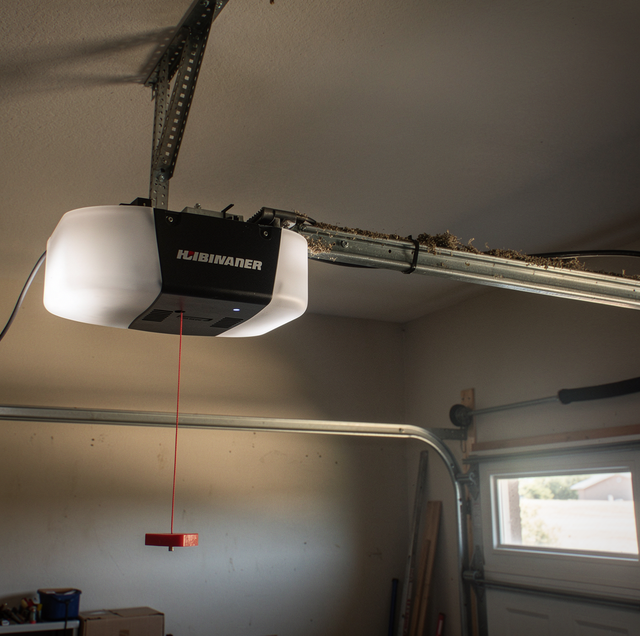
You press the remote, or reach over and hit the wall button, and the ceiling unit answers right away with a low, steady hum, sometimes with a light flicker. But the door itself does nothing. No lift, no shudder, not even an inch of travel. That gap between the opener clearly getting power and the door refusing to move almost always traces back to one of four things: a worn part inside the opener head, a disconnected trolley, a spring that's no longer doing its job, or a door that's physically stuck. Only one of those you can check yourself in under a minute; the rest call for a trained eye.
The Stripped Nylon Drive Gear Is the Most Common Cause
Inside every chain-drive and belt-drive opener, a small nylon gear meshes with the motor's output shaft, turning the sprocket that pulls the chain or belt along the rail. That gear is made of nylon on purpose: plastic teeth wear down and eventually shear off long before they would ever damage the motor's internal gearbox or burn out the windings. When those teeth strip, the motor keeps spinning freely with nothing to grip, so it still hums and the light and wall control still respond normally, but the sprocket never turns, and the trolley never moves.
The tell is in the sound. A healthy motor under load has a mild whine as it starts pulling weight. A stripped gear sounds close to a kitchen mixer spinning in an empty bowl: plenty of motion, nothing to grab onto, no strain in the pitch at all. A technician opening the opener housing later will often confirm it by finding white plastic shavings or fine plastic dust near the gear, left behind as the teeth wore away, but from the floor the sound alone is usually enough to point to this cause.
Why it fails: Age and cycle count. A gear that has opened and closed a door for years, especially one that runs dry without lubrication on the rail, wears out faster. A door that is out of balance also loads the gear harder on every cycle, which accelerates wear.
A Disengaged Trolley Means the Opener Isn't Even Connected
Every opener has a manual release, a cord (usually red) hanging from a mechanism on the trolley carriage. Pulling it disconnects the trolley from the drive chain or belt, allowing the door to be opened by hand during a power outage or when the opener is stuck. If that cord was accidentally tugged, caught on a stored item, or pulled during a past repair and never reset, the trolley will remain disengaged. The motor runs the chain or belt back and forth along the rail exactly as designed; the hum is completely normal, but the trolley, and with it the door, never gets pulled along.
This is the one part of this whole problem you can safely check yourself. With the door closed, locate the trolley carriage riding the rail near the header and look for the release arm hanging down separate from the carriage body. Pull the cord toward the motor unit, away from the door, until you hear or feel it click back into the carriage, then try the opener again. If the door moves normally after that, the fix cost nothing.
A Broken Spring Can Leave the Motor Humming Uselessly
The opener was never built to lift a garage door on its own. A torsion spring mounted above the door (or a pair of extension springs along the upper tracks on older setups) carries almost the entire weight, and the opener's job is only to guide the door along that spring's assist and add the last bit of force. When a spring breaks, that weight-bearing job disappears, and the opener motor is suddenly being asked to lift several hundred pounds of door on its own. Most residential openers cannot do it. The motor hums, strains, and the door either does not move at all or creeps up an inch before stalling.
Torsion springs commonly fail after the first hard freeze of the season, since cold makes the coiled steel brittle and less able to flex under the same load it handled fine all summer. But springs also fail from ordinary metal fatigue after tens of thousands of open-close cycles, in any month, with no cold snap involved at all. From a safe distance, with the door fully closed, you can look up at the spring mounted above the door and check for an obvious gap in the coil: a broken spring usually shows a visible separation where the two halves have pulled apart. Do not touch the spring, cables, or drums when testing this. A torsion spring holds enough stored tension to cause serious injury, and diagnosing or replacing it is licensed-technician work only.
A Stuck or Jammed Door Also Stalls the Opener
Sometimes nothing inside the opener head is wrong at all; the door itself simply will not budge. Rollers can jump the track, a bent track can pinch the door's edge, or debris can wedge into the bottom bracket. On a slab foundation, expansive clay soil that swells after rain and shrinks in dry weather can shift the garage opening slightly out of square over time. That does not damage the door, but it can cause a panel to bind against the track or drag along the weatherstripping just enough that the opener's force setting cannot overcome the friction. In that case, the fix is squaring and rebalancing the door and track, not replacing the door.
A safety sensor problem usually shows up differently and on the close cycle instead: the opener refuses to close, reverses partway, or the wall control's light blinks a fault code, rather than humming on an open command. It's still worth a quick look, since it takes ten seconds to rule out: check whether the small LED lights near the bottom of each track are solid and facing each other; a blinking or dark sensor confirms an alignment issue is in play, even if it isn't the reason the door won't open.
How to Tell Which One You're Dealing With
Listen first: A steady, unstrained hum that sounds the same whether the door is supposed to open or close usually points to the drive gear or a disengaged trolley, since the motor is not meeting real resistance. A hum with some strain to it, followed by the door creeping slightly before stopping, points toward a spring that is no longer sharing the load.
Check the release cord second: This takes ten seconds and rules out the cheapest, most common cause before you assume something is broken.
Look, but do not touch, at the spring third: A visible gap in the coil above the door confirms a break. If the spring looks intact, the coil is unbroken, and the trolley is engaged, the drive gear inside the opener head is the leading suspect.
What to Do Next
If the release cord fix does not solve it, the door needs a technician who can open the opener housing, inspect the gear and sprocket, check the chain or belt tension, and rebalance the door if the track geometry is off. If a spring is broken, it's usually a same-day repair, not a reason to replace the whole opener or the door.
Frequently Asked Questions
A technician typically replaces the gear and sprocket assembly in well under an hour, since the two parts wear together, and installing a new gear against an already worn sprocket often strips the replacement gear again within a few weeks.
Most residential openers include thermal overload protection that cuts power to the motor after a couple of minutes of sustained resistance, so repeated stalled attempts are more likely to trip that safeguard than destroy the motor outright, though it is not something to test on purpose.
Screw-drive openers move a carriage along a threaded steel rod instead of a chain or belt, and they rarely strip a nylon gear the same way; the comparable wear part is the drive nut riding the threaded rod, which can wear smooth and slip under load, resulting in a similar humming, no-movement effect.
Repeated presses can trip the opener's internal circuit breaker or force-adjustment limits, and once that happens, the unit may need to be unplugged for about ten seconds and plugged back in before it will respond to the remote or wall button again.
Yes; on many doors, a snapped spring is accompanied by a bottom corner of the door sitting slightly lower than the other, since the cable on that side loses tension once the spring stops carrying weight. A licensed technician checks both signs together before recommending a spring replacement.
A yearly tune-up typically includes lubricating the rail and chain with a light lithium grease and rechecking the opener's up-and-down force limits, since force settings that are too high cause the motor to fight the door on every cycle and wear the gear faster than normal use alone.
A humming opener and a still door feel like a bigger problem than they usually are. Most of the time it is a worn nylon gear or a manual release cord that got bumped, not a dying motor or a door that needs replacing. The one exception is a broken spring, and that is worth respecting rather than working around, since the opener was never designed to lift a door without one.
Get a free on-site diagnosis — Arnold inspects the drive gear, trolley, and spring in one visit and gives you a written repair-first quote before touching anything. Arnold's Garage Door & Gates serves Fort Worth, Alvarado, and the DFW metroplex. Call Arnold: 682-337-7220.
