
Garage Door Rollers Shedding Bearings: Why It Happens
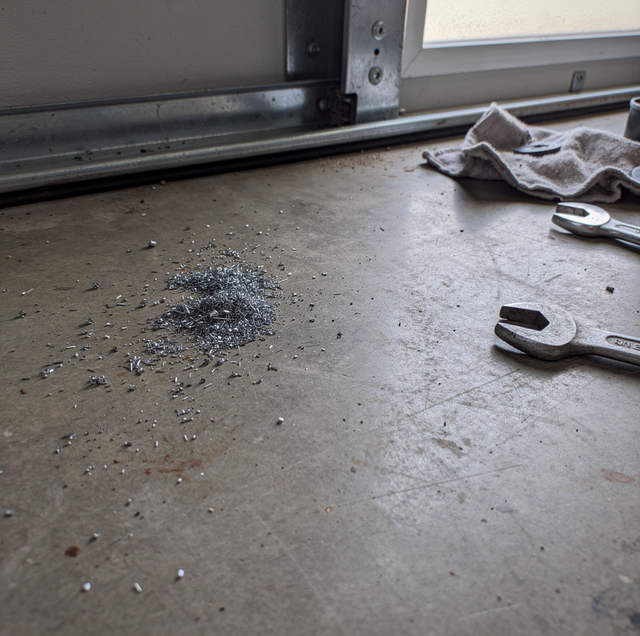
A door that used to glide now grinds. A few silvery specks show up on the floor near the track, and you assume it's dirt until you look closer and realize it's metal. Rollers are among the smallest, cheapest parts on the whole door, and among the first to fail once dry lubricant and thousands of open-close cycles catch up with them. Understanding how a roller is built explains why bearings shed in the first place, and why the fix is usually simpler than it sounds.
How A Garage Door Roller Is Built
A garage door roller looks simple from the outside: a round wheel on a short steel stem, but the wheel itself is doing more engineering work than it gets credit for. Inside the wheel sits a ring of small steel ball bearings, packed between an inner and outer race, so the wheel can spin freely around the stem rather than drag against it. That stem bolts or hinges to the door's roller bracket, and the wheel portion rides inside the track, carrying a share of the door's total weight every time it travels up or down.
The wheel itself comes in two common versions. A nylon roller wraps around a hard plastic wheel on the same internal bearing, running more quietly and requiring less track lubrication since nylon doesn't grind against steel the way metal does. A steel roller skips the nylon; the wheel itself is solid metal, holding up to heavier cycle counts but running louder and depending more heavily on the bearing staying lubricated to avoid metal-on-metal wear.
Either version depends on the same core part working correctly: the sealed (or semi-sealed) bearing race inside the wheel. That's the component doing the real job of letting the roller spin smoothly under load, and it's also the part that fails first.
Why Bearings Shed And Fail Over Time
Bearing failure rarely happens all at once. It's a slow breakdown that usually traces back to one or more of four causes working together.
Lack of lubrication is the most common driver: the grease packed into a roller bearing's races at the factory reduces friction between the balls and races and keeps out grit that would otherwise grind against the metal. Once that grease dries out or washes away, the bearing runs dry. Metal balls rolling against bare metal races generate heat and friction with nothing to cushion the contact, and it doesn't take long before microscopic flaking starts at the surface of each ball and race. That flaking is the literal shedding: tiny fragments of hardened steel breaking off the bearing surface and falling out of the housing.
Worn or cracked bearing seals let contamination in: Better-quality rollers include a thin seal or shield around the bearing opening meant to keep grease in and dust and debris out. That seal degrades with age and heat exposure like any other rubber component on the door. Once it cracks or curls away from the race, grit from the track gets pulled directly into the bearing every time the wheel spins, acting like fine sandpaper against the balls and races.
Age and cycle count wear bearings down regardless of care: Every bearing has a finite service life measured in cycles, not years, though ordinary use translates directly into cycle count. A door that opens and closes multiple times a day accumulates wear faster than one used occasionally, and even a well-lubricated bearing eventually reaches the point where the races have worn thin and lost their smooth surface. At that stage, no amount of fresh grease can reverse the damage; the metal is simply worn out.
Misaligned track adds uneven load to the roller: A track that's bent, pulled slightly out of parallel, or knocked loose at a bracket forces the roller to ride against one edge of the channel instead of rolling straight through the center. That uneven contact concentrates the door's weight onto a smaller portion of the wheel and bearing race with every cycle, wearing that section down far faster than a properly aligned roller would wear. A misaligned track can turn years of bearing life into months.
These four factors rarely act alone. A roller running dry on a misaligned track wears out considerably faster than a dry roller on a straight track, since the extra load amplifies the damage caused by the lack of lubrication.
Warning Signs Of Failing Rollers
The symptoms of a shedding bearing tend to show up in a fairly predictable order, and catching them early makes the eventual fix cheaper and less disruptive.
Grinding or popping sounds are usually the first thing you notice. A healthy roller rolls almost silently through the track, so any new grinding, rattling, or popping noise as the door travels is worth paying attention to. The sound often gets sharper at the same point in the door's travel each time, a clue that one specific roller, rather than the whole system, is the source.
Visible metal shavings or debris near the track are the clearest physical evidence. Because the shedding is literally tiny bearing fragments breaking free, they tend to collect on the floor directly under the section of track where the failing roller travels. A small pile of fine metal flakes in that spot is a strong sign the bearing has already started to break down internally, even before the sound becomes obvious.
A door that judders or catches while moving is usually a later-stage sign. Once a bearing has lost enough material, the roller no longer spins smoothly inside its housing, so instead of rolling it starts to hitch, catch, or vibrate as it's dragged rather than rolled through the track. This puts the door through a rougher, jerkier motion on every cycle, harder on the opener and on the rest of the hardware around that roller.
Any one of these on its own is worth a closer look. Two or more together, especially grinding paired with visible metal debris, usually means a bearing has already progressed past the point where lubrication alone will fix it.
The Risk Of Ignoring A Failing Roller
A single worn roller rarely stays a single-roller problem for long. Once one roller starts dragging instead of rolling smoothly, the door's weight redistributes onto the remaining rollers and onto the opener, which has to work harder to pull a door that's no longer moving freely through its full travel. Over time, that uneven strain accelerates wear on the neighboring rollers, the track, and the opener's drive components, turning one bad part into a longer list.
The more immediate risk is a roller that fails completely mid-cycle rather than gradually. A bearing that's shed enough material can seize or come apart while the door is in motion, and a roller that stops turning suddenly under load can jump the track entirely. A door stuck partway open, with a roller jammed off its track, is both an inconvenience and a safety concern, since a door hanging unevenly puts extra stress on the cables and springs holding the rest of it up. A roller that's already grinding and shedding visible debris can be within weeks of a harder failure, not months.
Roller Replacement Versus Full Track Service
Not every symptom calls for the same fix, and telling the two apart matters for getting the right repair done the first time.
Roller replacement addresses the bearing itself. If the track is straight, true, and properly aligned, and the noise or debris traces back to one or two specific rollers, swapping those rollers is usually the whole job. A technician removes the affected roller from its bracket, replaces it with a new one matched to the door's track type and stem length, and rechecks that the door travels smoothly through a full cycle afterward.
Full track service becomes necessary when the rollers are failing because the track itself is bent, misaligned, or pulling loose from its brackets. In that case, replacing rollers alone treats the symptom without touching the cause, and the new rollers will start wearing unevenly on the same bad track within a similar timeframe. Track service involves realigning or replacing the damaged section, resecuring loose brackets, and confirming the door runs true through the full channel before new rollers go in. A technician checking a grinding, shedding roller should always inspect the track alongside the roller itself.
Between the two, track misalignment is generally the more involved repair, but it's also the one that prevents the problem from recurring across every roller on that side of the door.
Lubrication Maintenance You Can Do Between Visits
A small amount of routine care between professional visits meaningfully extends roller life, and it takes only a few minutes.
Applying a light coat of lithium-based grease or a silicone garage door lubricant to each roller stem and to the track, roughly twice a year, keeps the bearing race running smoothly and helps flush out fine grit before it grinds against the balls and races. Avoid heavy grease or oil-based products that attract dust rather than shedding it; a lighter lubricant made for garage door hardware works better than a generic all-purpose grease.
While lubricating, do a quick visual check: run a hand along the track (door closed, opener disconnected), feeling for rough spots, and check each roller for obvious wobble, cracking on a nylon wheel, or rust on a steel one. Catching wear early, before grinding and metal shavings show up, means a simple part swap rather than a repair that's also chasing damage to the track or opener.
None of this replaces a periodic professional check. A technician can spin each roller by hand, listen for play in the bearing race, and check track alignment in ways that are hard to replicate from the floor. Between those visits, keeping the hardware lubricated is the single most effective thing a homeowner can do to slow bearing wear.
Frequently Asked Questions
Most rollers last seven to ten years of ordinary daily use, though that range shrinks considerably on a door that cycles more often, runs dry without lubrication, or travels on a misaligned track. Cycle count, not calendar age alone, drives when a bearing wears out.
A single roller can usually be replaced on its own if the rest are still turning smoothly and quietly, since rollers wear independently rather than as a matched set. Still, if one roller has failed from age and lubrication neglect, the others on the same door have seen the same conditions and may not be far behind.
Grinding often points to a bearing, but a dry hinge, a loose bracket, or debris caught in the track can produce a similar sound. Checking for visible metal shavings near the track is one of the clearest ways to confirm a bearing is the source rather than something else nearby.
Both types share the same internal bearing, so the failure mechanism- dried grease, cracked seals, worn races- is identical either way. The visible symptoms differ slightly: a nylon wheel may crack or flatten on one side, while a steel wheel is more likely to show rust or a rough surface.
Yes, indirectly. A roller that drags rather than rolls smoothly forces the opener to pull harder through that part of the door's travel, and sustained extra strain on the motor and drive components shortens their working life. The opener wasn't built to compensate for hardware that's no longer rolling freely.
The bracket is the metal fitting bolted or hinged to the door panel that holds the roller's stem; the roller is the wheel-and-bearing assembly riding inside the track. A bracket can loosen or bend on its own without the roller failing, another reason a technician checks both together rather than assuming a grinding sound means a bad roller.
A door that grinds, catches, or leaves behind metal flecks is telling you something specific: a bearing has started to break down, and the sooner that gets addressed, the smaller the repair stays. Left alone, one bad roller tends to drag the rest of the hardware down with it.
Get a free on-site roller and track inspection — a technician checks every roller by hand, confirms track alignment, and gives you a written repair-first quote before touching anything. Arnold's Garage Door & Gates serves Fort Worth, Alvarado, and the DFW metroplex. Call Arnold: 682-337-7220.
