
How Long Do Garage Door Openers Last — Count the Cycles
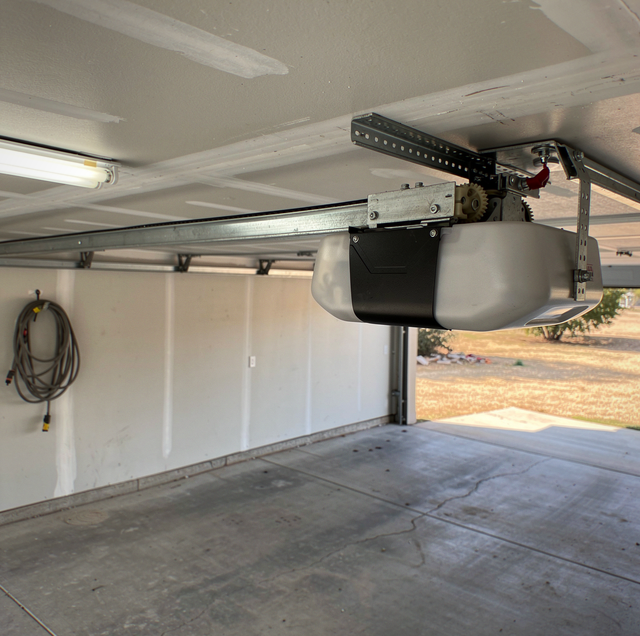
Monday morning the door goes up for the first car and comes back down. Twenty minutes later, it runs again for the second time. It runs at lunch when someone comes home, again for the dog, again at six, again when the trash goes out. By Monday night that opener has done more work than a weekend-only garage does in a month.
That tally is the number an opener's working life gets measured against. One full open plus one full close is a cycle, and every cycle starts the motor, turns the drive gear a fixed number of teeth, and runs the trolley the length of the rail and back. Nothing in that box wears while the garage sits quiet. It wears when a button gets pressed.
So the useful question about lifespan is arithmetic: how many times the unit has run, and what each of those runs costs it. That count is something a household can estimate and influence more than most owners realize.
What One Cycle Costs the Machine
Every cycle spends a little of five things at once.
The motor takes its hardest load in the first instant of movement, when it has to break a stopped door loose. On an AC opener, a start capacitor dumps a stored charge to supply that jolt; DC units substitute a soft-start control board for that stage and carry no start capacitor of the usual kind. The motor's steel worm gear drives a nylon gear that is sacrificial by design, softer than everything around it, so the motor does not absorb the wear. The trolley rides the rail on nylon wear surfaces and thins the factory lubricant a little on every trip. The logic board reads travel and monitors the safety sensors from the first inch to the last, and its receiver decodes the remote signal that started it all.
How each of those parts behaves once it gives out is a repair-or-replace question covered separately. What matters for lifespan is that all five sit on the same meter, and the meter only moves when the door does.
What Multiplies a Household's Count
The largest multiplier is whether the garage is the main entrance. In a house where everyone comes and goes through the garage, the door runs for every departure, and every return- two cycles per person per errand- and the front door barely gets touched.
Drivers matter next, and the number changes without anyone having to recalculate. A second car in the household, a teenager who just started driving, a partner whose shift no longer overlaps with yours: each one adds its own departures and returns rather than sharing existing trips. Work schedules cut both ways. A commuter who leaves once and comes back once runs a tighter count than someone working from home who steps out three separate times.
Then there is everything that has nothing to do with cars. Trash and recycling out and back. The dog going to the yard through the garage. A mower in spring and fall. A detached garage crossed on foot creates a different pattern again, since the door is often opened once to reach a tool and again to put it away.
A second door on the same house splits the traffic, but rarely evenly. The one closest to the kitchen takes the daily runs while the other holds the boat and opens a few times a season. Two openers bought together for that house sit on completely different meters from the first week.
Why the Same Model Ages at Different Rates
Put matching units in two houses on the same day, and the arithmetic separates them. A garage door that opens four times as often reaches any given amount of wear in roughly a quarter of the time, so a unit three years into service in a heavy-use house can be further along than a nine-year-old unit in a house where everyone uses the front door.
Count is only half the arithmetic. The other half is what each cycle costs, and that varies as much as the count does. A heavy insulated door on tired rollers takes more out of the motor per run than a light door on rollers that spin freely. A garage that runs well above outside temperature through summer works the motor and board hotter than one that stays moderate. And a door that gets stopped partway and restarted spends a fresh start on every restart, which is where the motor and the start capacitor take their real load.
Drive type belongs in the same column. A stretched chain imposes a shock load on the rail at every start, whereas a belt transmits the same pull more evenly. A screw drive carries the load on a threaded steel rod instead, a different wear path entirely. And a jackshaft unit mounted beside the door on the torsion shaft has no rail or trolley to wear at all.
Manufacturers publish cycle ratings for the mechanical parts they build, which is the closest thing to an honest lifespan figure they offer. What no manufacturer can publish is your household's count, and the count is the variable that moves.
An Unbalanced Door Raises the Cost of Every Cycle
Because the spring system is built to carry nearly all of the door's weight, leaving the opener only the small remainder, that remainder grows as springs relax with age. The motor pulls harder, the nylon gear takes more force per tooth, the trolley loads the rail more, and the board handles a larger current draw than it was sized for. Nothing about the count changed. Everything about the cost per cycle did.
That is why an opener on a neglected door reaches the same condition in far fewer cycles than the identical opener on a balanced one. The extra load does not pick one victim; it affects every part of the chain on the same run.
A door that stops short or reverses may indicate that the springs are no longer carrying their share of the load. Never adjust torsion or extension springs yourself; unequal tension under load can cause serious injury. That work belongs to a technician.
What Wear Looks Like When It Arrives Early
In a high-cycle garage, the first changes surface while the unit still looks new, so they get waved off. Sound is usually the first channel. An even hum picks up a rougher edge, a grind or a whine that was not there last year, as the nylon gear's teeth start to round off. The door's behavior has not changed yet.
Hesitation at the start of travel is the other early change, a brief catch before the door gets moving. It can come from the rail, the trolley, or a weak start capacitor on an AC unit. The rail wears unevenly as well, with the trolley's resting spot taking more than the rest, because that is the point every trip launches from.
Remote range that comes and goes is usually blamed on the opener and shouldn't be. Check a weak remote battery first, then the ambient radio noise a garage collects from LED bulbs, chargers, and nearby transmitters, since both are more common than a failing receiver. A receiver that has lost sensitivity is possible with age, but it belongs at the end of that list.
A door that triggers itself without a button being pressed is worth checking against the board once the remote, the wall control, and the low-voltage wiring running to it have been ruled out. A stuck button on a remote wedged in a coat pocket produces the same symptom.
What Runs the Count Up Fastest and What Slows It Down
Part of the count is fixed by how the household lives, and part of it is habit. Running the door out to the trash can and back again takes two cycles on a walk that could have cost one. A door left open through an afternoon of yard work spends nothing at all.
Cost per cycle is where the larger savings sit. Rollers, hinges, and track that are lubricated on a schedule reduce the drag the motor fights on every run, and it is one of the few moves a homeowner has that reduces wear across the whole chain at once. Keeping the door balanced is the other, and that one belongs to a technician.
Take a phone video of one full open and one full close today, sound on, and note the date. Next year the same video gives you a real comparison for travel time and motor noise instead of memory.
None of this gets read off an install date. An opener's condition is read off how it runs: whether the motor sounds the way it did last year, whether it starts clean every time or catches first, whether the door reaches full open and full close on every run. Pair that with an honest tally of how often the door runs in a normal week, and you have a far better picture of where the unit stands than the sticker on the motor housing ever will.
Count a typical week, multiply it out, and the answer tends to surprise people who assumed theirs was a low-use door. A garage serving as the household's main entrance is not a slightly busier version of a weekend garage. It runs a multiple of that count, and the parts inside it are on a schedule to match.
Frequently Asked Questions
Openers with Wi-Fi connectivity keep an activity history in their app, and every open and close is recorded with a timestamp, turning an estimate into an actual count as far back as the log goes. Units without connectivity keep no counter of any kind, so nothing inside the housing records how much work it has done. That makes the app history the only place a real number exists.
The wear itself is similar; what you can hear is not. Chain drives run louder to begin with, so the early grinding or whining note of a gear starting to round off is hidden beneath normal operating noise. Belt drives run quiet by design, so that same shift stands out much sooner, which can make a belt unit look like it is wearing out early when it is only easier to hear.
They are separate components on separate schedules. A backup battery ages on its own charge cycle whether the door runs or not, since it holds a charge continuously in case of an outage, so it can weaken in a garage that barely cycles at all. A weak backup shows up only when the power is out, and the opener will not run on battery, while a weak start capacitor shows up as hesitation during normal powered operation.
That specific signature points at the photo-eye safety sensors rather than at anything that wears on a cycle count. They sit within a few inches of the floor on each track, which puts them in reach of a trash can or a shovel that knocks a bracket out of alignment, and a fogged lens or a spider web across the beam does the same thing. A door that gets partway through a close and then stops is a different symptom with a different cause.
Yes, on lubrication. Manufacturers of screw-drive openers specify a particular grease for the threaded steel rod and expect it to be reapplied periodically, whereas a chain or belt rail requires much less attention. Substituting an ordinary spray lubricant pulls grit onto the rod and adds drag rather than removing it, which raises the cost of every cycle instead of lowering it.
Yes. The board carries a mechanical relay that switches the motor between open and closed, and its contacts erode from arcing each time they make and break under load, pitting the metal until the connection becomes unreliable. That relay can develop a fault on its own, causing a door to open fine but not close, or the reverse, before anything else on the board shows a problem.
Know where your opener sits in its wear cycle — a quick evaluation gives you a clear read before a part fails without warning. Arnold's Garage Door & Gates serves Fort Worth, Alvarado, and the DFW metroplex. Call Arnold: 682-337-7220.
