
Garage Door Won’t Close All the Way? What Else to Check
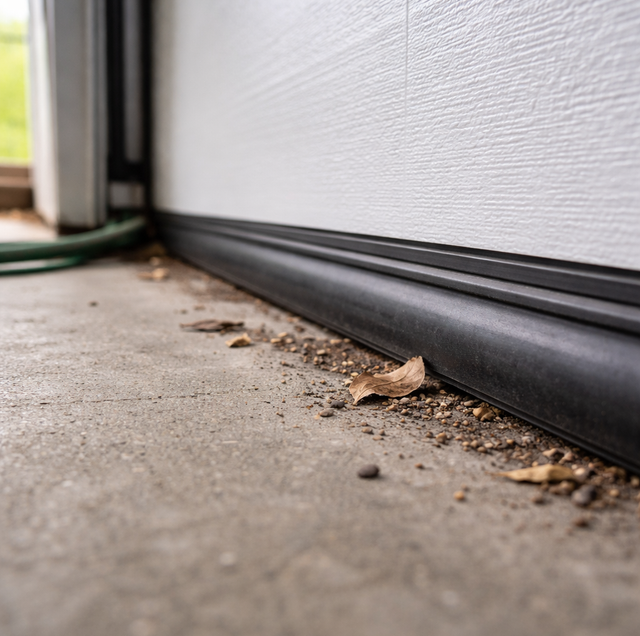
Quick Answer: If you've confirmed the photo-eye sensors are clean, aligned, and holding a steady light, and the door still won't finish closing, look at a close-limit setting that's drifted off its mark, a weather seal or threshold packed with debris, a door section heat-soaking in the afternoon sun, or a wall button and remote quietly disagreeing with each other. None of these show up as a broken beam, which is exactly why they get missed on the first pass.
Most guides to a garage door that won't seat start and end with the photo-eye sensors, and for good reason: dirty or misaligned eyes cause the majority of these calls. If you haven't already wiped the lenses, cleared the beam path, and watched both LEDs hold a steady glow through a full close cycle, do that first. But if you've already been through that and the door still stops short or backs off partway, the cause is almost always something ordinary. It's just not the thing everyone checks first.
The Close-Limit Setting Creeping Off Its Mark
Every opener stores a close-limit value, the exact point in the door's travel where it decides the door is fully down. That value doesn't reset on its own, but it does drift. A slightly loose drive gear, a belt or chain that's stretched a fraction over years of cycles, or a trolley that's worked loose from its carriage can all shift where the opener thinks "closed" actually is, even though nothing about the door itself has changed.
What it looks like: The door stops the same one or two inches short every single time, quietly, with no bounce or reversal. It isn't refusing to close the way a tripped sensor refuses. It stops early because the opener believes it has already arrived.
The close-limit adjustment sets where the opener stops trusting its own resistance sensing during a close, which is tied directly to the entrapment-protection system. Setting it wrong in either direction, too short or driven too far into the floor, can defeat that protection. This one is worth having a technician reset rather than working through by trial and error.
What to do about it: Note exactly how short the door stops and whether it's consistent every cycle, since that detail tells a technician whether they're looking at a simple limit reset or something upstream shifting the drive itself, like a worn gear or a stretched belt. Confirming the pattern yourself before the call saves a diagnostic step once someone is out to look at it.
A Weather Seal or Threshold Doing the Blocking
A door that stops the last inch short isn't always an electronic problem. Get down at floor level and look at exactly where the bottom seal meets the concrete.
Common culprits: A pebble or a wheel stop sitting just inside the door's path, a garden hose left across the threshold, or a bottom seal that's swollen, warped, or curled at one corner can each hold the door up just enough to look like a limit or sensor issue. In wetter stretches, packed mud or leaf litter along the threshold does the same thing. In a hard freeze, the seal itself can stiffen and pack with ice at the corners, refusing to compress flat even though nothing else has changed.
The fix: Clear whatever's sitting in the path. If the seal is cracked, curled, or no longer compressing evenly across its full width, that's a part worth having replaced, since a seal fighting the door on every cycle tends to get worse rather than settle.
When a Door Section Heat-Soaks in the Afternoon
A garage door and the track it rides in are both fixed at set points along the wall, so when the door's exposed face spends hours taking direct afternoon sun, especially on a dark-colored, uninsulated steel section, the panel itself grows slightly along its length. Anchored at the brackets on both ends, that growth has nowhere to go but a very slight bow between fasteners, which is enough to change how snugly a roller rides in the track at exactly the point where the bow is worst. Nylon rollers, common on quieter setups, expand a bit faster than the steel around them, which can tighten that fit further right as the door is heating up the most.
The tell: A door that closes cleanly in the morning but starts hesitating, dragging, or stopping short by mid-afternoon, on a door that takes hours of direct sun or sits in an uninsulated garage that heats up through the day, points toward this rather than anything electrical. It tends to ease back to normal once the door cools in the evening.
What's safe to do yourself: A quick visual check of the rollers, looking for a flat spot or a worn edge on the side that catches, is fine. Straightening a bowed track or swapping a roller isn't a homeowner job, since forcing a bent section tends to bend it further, but noting when the hesitation starts and stops during the day gives a technician a real pattern to work from.
When the Remote and the Wall Button Disagree
Sometimes the door closes fine from one control and not the other, and that split is itself a useful clue.
If the wall button closes it but the remote won't: The safety circuit and the motor are both working fine. The fault is almost always on the remote's end: a weak battery, a remote that's fallen out of sync with the receiver, or interference from something else broadcasting on a similar frequency nearby.
If neither control will finish the close: That points back toward the limit setting, the drive itself, or a genuine obstruction, since the wall button is a direct, hard-wired command with no signal to lose sync with.
When a Board Behind the Safety Circuit Is Misreading Itself
If the eyes are aligned, the threshold is clear, the door isn't heat-soaking, and both controls behave the same way, what's left is usually inside the opener head itself.
What this looks like: Openers built in the last couple of decades run a self-test on their own safety circuit every time they close, confirming the sensor signal looks the way it's supposed to before committing to the last few inches of travel. A logic board that's aged past its reliable years can start failing that internal check intermittently, refusing to close even though the sensors themselves, the wiring, and the beam are all fine. Separately, a terminal block backing partway out of its socket at the motor head, from years of vibration rather than any outside damage, produces the same intermittent refusal. Sorting one from the other means testing the circuit at the opener itself, which is technician work rather than a driveway check.
Frequently Asked Questions
No. On openers that store the limit as a digital value, that number sits in memory independent of whether the unit currently has power, so a brief outage or a deliberate unplug-and-replug won't move it. Older openers set the limit with a mechanical screw stop instead of a stored number, and power has nothing to do with that either way. If the door stopped short before the outage, it stops short again once power's back.
Yes, and it's worth checking if the problem started right after any opener swap or reinstall. Every opener has its own close-limit, set independently of the door it's attached to, so a replacement unit has to be programmed from scratch for that specific door's travel distance. A limit carried over incorrectly, or never fully set during installation, produces exactly the "stops a couple inches short" pattern described above.
A drifted setting is consistent: the door stops at the same short spot every time, and a proper reset fixes it and holds. A limit switch on its way out behaves erratically: seating fine some cycles, stopping short on others with no pattern tied to temperature or time of day, sometimes drifting a little further with each passing week even after an adjustment. That erratic pattern is what points a technician toward replacing the switch instead of just resetting it.
Humidity can swell wood-composite trim around the opening and change how a weather seal seats against the threshold, which is a different mechanism than a steel section heat-soaking in direct sun. If the pattern tracks with humid days specifically rather than hot, sunny ones, look first at the seal and the trim around the opening.
Testing each control once or twice to compare results is useful for narrowing things down. Repeatedly cycling the door once you already know it's stopping short is a different story, since every cycle that ends partway adds wear to whatever is already straining, whether that's a limit switch, a roller, or a loose terminal connection. Once you've gathered enough to describe the pattern, stop testing and get it looked at.
Yes, and it makes a real difference. Note whether the photo-eyes held steady through a full cycle, whether the door stops at the same spot every time or varies, what time of day it happens, and whether the wall button and remote behave the same or differently. Handing over that pattern up front lets a technician start testing the actual suspect instead of repeating every check you've already done.
Get the real reason your door won't seat, not another guess — Arnold traces it to the actual setting, seal, or part instead of swapping parts at random. Arnold's Garage Door & Gates serves Fort Worth, Alvarado, and the DFW metroplex. Call Arnold: 682-337-7220.
