
Garage Door Opener Works Intermittently: What the Pattern Shows
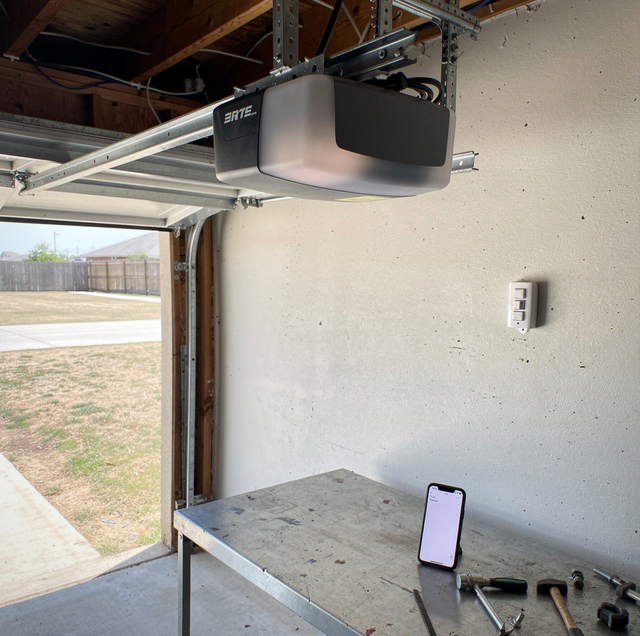
An opener that only misbehaves sometimes is harder to fix than one that never works at all. A unit that fails every time presents a fixed problem: something is broken and stays broken until it's addressed. A unit that fails once a week and runs perfectly for the person standing next to it presents the opposite problem: a fault that is real but won't hold still long enough to be caught.
The pattern is the diagnosis. An intermittent fault almost always correlates with something that changes: temperature, the time of day it occurs, which control you used, and how long the opener has been sitting. None of those proves a cause by itself, but together they narrow the field faster than opening the housing ever will.
This is about a fault that shows up only sometimes, not an opener that gives no response at all, not a door that moves on its own, and not a tripped breaker, since those point to different problems with different starting points.
Temperature and the Difference Between the First Cycle and the Tenth
Cold and heat cause different failures, and knowing which one matches your fault narrows the list before anyone touches a tool.
Cold makes the grease and oil inside the drive system stiffer than the motor expects. On the first cycle of a cold morning, the motor pushes through more resistance than it will an hour later once everything has warmed slightly, which is why a struggling start that clears on the second attempt often tracks with the coldest part of the day. A motor that hesitates or trips its internal overload only on the first cold cycle is indicative of a lubrication problem rather than a wiring problem.
Heat works on the electrical side. As the garage interior climbs well above outside temperature, a start capacitor that has already lost some of its capacity can fall short of the current surge the motor needs to begin turning, and a fault that appears only during the hottest hours of the afternoon is describing something already close to its limit being pushed the rest of the way over.
A third pattern ties to how fast the temperature is swinging rather than to heat or cold alone. A terminal connection expands and contracts with the metal around it, and a marginal one can make contact at some temperatures and lose it at others. That puts the fault at the edges of the day, when the garage is warming fast or cooling fast, rather than at either extreme.
Time of Day and What Else Is on the Same Clock
If a fault only shows up around the same hour, something on a schedule is involved, and finding that something usually points straight at the mechanism.
Sun angle is the most literal example. As the sun tracks across the sky throughout the year, direct light can fall on a safety sensor at nearly the same time each day for a stretch of weeks, and a beam washed out by strong light can register with the control board as an obstruction would. A fault that clusters in one afternoon window and disappears on cloudy days describes exactly that correlation.
A shared electrical circuit is a known contributor as well, since another motor's starting surge can momentarily sag the voltage the opener sees, and that is a fault with its own diagnosis.
Radio traffic has a daily rhythm too. Cordless equipment, wireless doorbells, and other devices operating near the same frequency see more use at certain hours, and a receiver sharing that spectrum can experience interference clustered around those times. Nothing has to be wrong with the opener; the fault and the interference simply share a clock.
Which Control You Used When It Failed
The fault's relationship to the remote and to the wall console splits the search in two from the first data point.
A fault that follows the remote but never the wall control can be traced to a light source near the receiver. A fault that shows up only at the wall console and never with a remote points the other way: at the wall unit and the low-voltage pair feeding it, since the opener clearly acts on the same command when it arrives by radio.
A fault that affects both controls equally is the more serious signal, because whatever is wrong then sits downstream of both inputs, in the part of the system that every command has to pass through, no matter where it started. Knowing that early beats spending a month suspecting a control that was never involved.
If you carry more than one remote, note which one was in your hand each time. Two remotes paired to the same opener can behave differently enough that "the remote" is not specific information on its own.
How Long Since the Door Last Moved
A unit that fails on the first attempt of the day and works normally afterward is telling you something different from one that fails at random regardless of when it last ran.
That first-attempt pattern usually implicates the start of the cycle rather than the cycle itself. The common version is a lubricant that has cooled and stiffened over several idle hours. A weakened start capacitor is the other, since the first attempt after a long rest is when the motor has the least help available and the most resistance to overcome at the same time.
A fault that strikes regardless of idle time points somewhere else, toward a condition that arrives and passes rather than one that settles in while the door sits.
When you log a fault, note the outdoor temperature, the time, which control you used, and how long it had been since the last cycle. One detail rarely points anywhere; the combination usually does.
The Part That Fails Intermittently Is Rarely the Part It Damages
An intermittent fault is worth chasing while it is still intermittent, and the reason has to do with which parts fail this way and which parts they take with them.
Faults that come and go start in the small, separately serviced pieces of the system: a contact inside a control, a screw terminal, a start capacitor, a battery. Each of those is a discrete item, replaced individually without disturbing anything around it. The parts they can damage arrive as assemblies instead. A motor and its power supply section are not rebuilt one component at a time.
The link between the two is the incomplete start. A motor told to run that cannot get moving draws far more current than a turning motor does, and it turns that current into heat with nothing accomplished. One such attempt is nothing. A weak start component producing that attempt on the coldest morning of every week, for a season, asks the motor to absorb that heat again and again, and the repair stops being a component and becomes the assembly around it.
The powerhead is line-voltage equipment, and its housing stays closed. Nothing in this article calls for opening it: what you can observe safely, you observe with the case shut and the unit hanging where it is.
A Fault That Has Gone Constant Has Usually Finished Damaging Something
A connection that fails occasionally is a connection already degrading, whether that is a terminal working loose, a joint fatiguing from repeated expansion and contraction, or a component that has lost part of what it started with. The occasional failure is the sign that a margin has already been spent.
As the wear continues, the conditions that trigger the fault broaden. What once needed a hard freeze starts happening on merely cool mornings. What once needed the hottest hour of the afternoon starts happening at mid-morning. Each step outward makes the fault look like a new problem when it is the same one operating across a wider range of conditions.
By the time an intermittent fault has become a constant one, something has usually finished failing rather than just started to. A start capacitor that struggled on cold mornings for a stretch has generally lost most of its capacity by the time it fails on every attempt. The stretch when the fault came and went was the failure already underway, showing itself at the edges of the operating range before it showed itself everywhere.
That is what an intermittent fault costs. The part that has to be replaced grows, and the pattern that would have identified it disappears once the fault fires every time and correlates with nothing. The logic board belongs at the end of that list and only at the end, reached after the remote, the wall control, and the low-voltage wiring have each been ruled out, because a board replaced on assumption leaves the real fault sitting where it was.
Frequently Asked Questions
Yes, and the cause is often subtler than a dead battery. Battery contacts inside a remote can develop a thin layer of corrosion, carrying current fine most of the time but occasionally failing to connect solidly. A remote that requires a second press describes this kind of intermittent contact rather than a dying battery.
It can. A cold-weather fault can disappear for weeks during a stretch of mild days and return with the first hard freeze because the condition that produces it only exists once temperatures drop far enough. A record kept entirely within a mild stretch can look clean yet still miss the fault entirely.
It can, at least for a while. Battery backup, offered on some DC-motor opener models, carries the unit through a brief dip in household power so the door still cycles normally, which means a sag that would otherwise stall a cycle can pass without leaving any evidence you would notice. Some models indicate when they are running on backup power.
Not with the door part way up. The release disconnects the door from the trolley, and a door stopped mid-travel can move once that connection is broken. Pull the release only when the door is fully closed, and leave a door that has stopped part way where it is until someone can look at it.
It's possible because the remote and the wall console arrive via different paths and then relay their commands to the same shared side of the system. A fault that looks remote-only because the remote is the control you use most often can still sit on that shared side and simply not have surfaced yet at the wall console.
It narrows things usefully. Lifting is the heaviest work the opener does, so a fault that appears only on the way up and never on the way down points toward the parts supplying starting and running effort. A fault that appears in both directions, or only on the way down, moves attention away from those parts and back toward the controls and the signal path.
Log when the fault happens and when it doesn't — so the pattern that never shows up during a single visit finally does. Arnold's Garage Door & Gates serves Fort Worth, Alvarado, and the DFW metroplex. Call Arnold: 682-337-7220.
