
Told the Whole System Needs Replacing? Ask This First
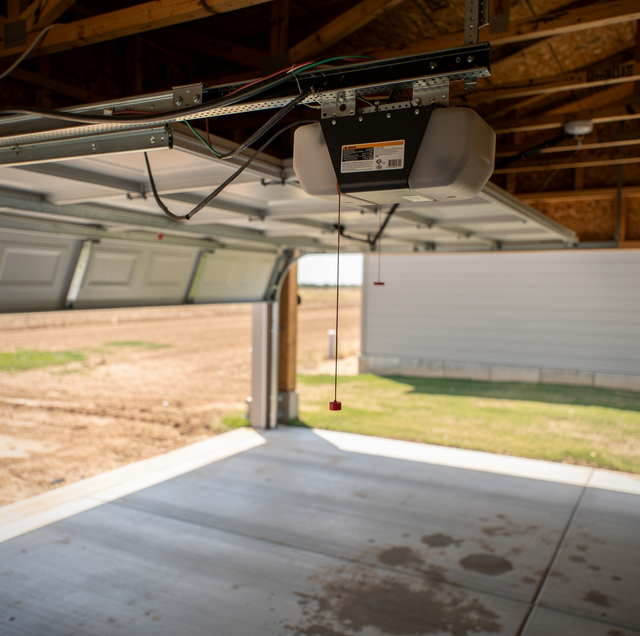
Quick Answer: A door, an opener, and a gate operator are three separate mechanical systems with distinct parts, failure points, and service lives. A recommendation to replace all three at once should be supported by a specific finding for each. If a technician can't name what failed in the opener separately from what failed in the door, that's worth a second opinion before you sign off on any of it.
You called about one problem. Maybe the door groaned every time it opened, or the opener started running longer than it used to before the door actually moved. By the time the technician left, the estimate covered a new door, a new opener, and sometimes a new gate operator, all on one line. That's a lot to absorb from a visit over a single complaint, and it's fair to want a second look before agreeing to any of it.
Sometimes a full recommendation like that is accurate. Systems age together, and a technician who has looked at a hundred doors at this stage of life may be reading real signs you can't see. But "replace everything" is also the easiest call to make without doing much testing, since it never requires explaining what's wrong with any one part. The way to tell the difference isn't guesswork. It's checking whether the recommendation traces back to a specific, testable problem in each system, or whether it's one broad call covering three pieces of hardware that don't fail for the same reasons.
Three Separate Systems, One Recommendation
A garage door consists of the moving panel, springs, cables, rollers, and the track it rides on. The opener is a different machine bolted to the ceiling or wall: a motor, a drive mechanism, a logic board, and sensors that tell it when to stop, reverse, or hold. A gate operator, when installed, is a third system, built around its own motor, gearing, and control board, running on hinges or a track unrelated to the door's hardware. These three systems wear out at different rates; an opener installed the same year as the door can fail first, or last five years past it, depending on how often it's cycled and what it's been exposed to.
A recommendation that lumps all three into one replacement decision, without separating what was tested in each, skips past that distinction. A worn roller in the door and a failing part in the opener are not the same repair, and finding one doesn't tell you anything about the other. If the estimate reads as a single number for "the whole system" rather than three findings tied to three sets of hardware, that's worth asking about.
What's Often Still Fixable in the Door Itself
A door earns a repair, not a replacement, more often than a driveway glance suggests. Worn rollers that have gone from smooth-rolling nylon to a hardened, chipped wheel cause exactly the kind of grinding and binding that gets mistaken for a dying door, and they're a part swap, not a structural problem. Hinges that have stretched their pivot holes let a panel wobble side to side as it travels, which reads as instability but is corrected at the hinge. A single dented or cracked section, especially one that isn't the bottom panel carrying the lift cables, is often replaceable on its own rather than a reason to redo the whole door. Cracked weatherstripping letting in light or drafts along the bottom or sides has nothing to do with the panels or the lift system at all.
None of that means every door in front of a technician is fine. A door with rust that's actually perforated a panel, or hardware that's cycled through more failures than its rated life would predict, is a legitimate case for replacement. The point is that "the door needs to be replaced" should be paired with which specific condition is present, not offered as a blanket call because the door is old or a little noisy.
What's Often Still Fixable in the Opener
Openers get replaced more casually than doors, partly because a homeowner has less sense of what's inside one. A small internal component can leave the motor straining without moving the door at all, and that kind of failure is often a contained, inexpensive fix rather than proof the whole unit is dead. A worn drive gear, the small plastic or nylon gear the chain, belt, or screw rides against, is a routine wear part on any opener that's run for years, and it looks like a total opener death from the outside even though it's a single-part swap. A drifted limit switch, the setting that tells the opener how far to travel before stopping, causes a door to reverse early or stop short, and it's an adjustment, not a hardware failure. Weak or dying remotes and keypads get blamed on "the opener" constantly, when the receiver is often fine, and the transmitter battery or programming is the actual problem.
A jackshaft opener, mounted beside the torsion bar rather than overhead, is built differently enough that it has its own separate wear points, and a technician recommending its replacement should be able to name which one has actually failed rather than treating it like a standard ceiling unit. An opener recommendation that skips naming a part and instead cites the unit's age alone is worth a second look, since plenty of openers run reliably for fifteen years or more.
What's Often Still Fixable on a Gate
Where a gate operator is part of the picture, the same logic applies with its own set of parts. A slide gate that's slowed down or started reversing partway isn't always a dying motor; the track it rides on can be the actual source of the added resistance. A swing gate that struggles against wind load or has sagged slightly on its hinge post is often a hinge and alignment fix rather than an operator replacement. The photo-eye sensors mounted at the base of the gate posts are a frequent cause of a gate suddenly refusing to close, and that's a sensor issue, not an electrical failure inside the board. A board that's tripped a breaker after a storm is often a wiring or surge-protection fix, not proof the board itself is fried.
How One Real Failure Becomes a Full Recommendation
There's a pattern worth watching for, separate from any single red flag. It starts with a technician finding one real problem, a worn part in the door or a weak component in the opener, then extending that single finding into a recommendation to replace everything nearby rather than testing each system on its own. Age gets used as a stand-in for a diagnosis: an opener from the same era as a door needing repair gets swept into the recommendation without its own test, on the logic that it's probably close behind. A part shortage on one component becomes the reason to replace a whole system rather than sourcing that one piece. A bundled recommendation gets framed as simpler for you, which may be true, but convenience is a different justification than necessity.
None of this means a technician making that call is dishonest. It's a fast way to close out a visit, and sometimes it's the right call anyway. The way to know is to ask what was tested in each system and whether the answer names a specific part.
What a Second Look Should Actually Test
A second opinion worth paying for tests each system on its own terms rather than repeating a general impression of the whole setup. On the door, that means disconnecting the opener and checking whether the door holds its position when lifted partway by hand, which shows directly whether the springs are doing their job. For the opener, it means checking the travel and force settings against the door's actual weight, and listening to see whether the motor runs but doesn't engage the drive, which points to a gear rather than the whole unit. On a gate, it means watching the operator through a full cycle to see whether it struggles at the same point every time, which usually means mechanical drag rather than a failing motor. One who repeats "it all needs to go" without touching any of that hasn't given you a second opinion so much as a second guess.
Matching the Quote to the Actual Problem
Once you have a written estimate in hand, a useful exercise is to line it up against what was actually found. A quote listing "door replacement" should point back to a specific condition: rust through a panel, hinges beyond adjustment, a track that won't hold square. A line for opener replacement should tie to a specific failed part or a settings problem adjustment already failed to fix. A single bundled figure covering the door, the opener, and a gate operator with no breakdown of what's wrong with each is worth asking to split apart, even if the answer confirms all three actually need work. A technician confident in the diagnosis will walk you through it system by system rather than asking you to take the total on faith.
When Full Replacement Really Is the Honest Call
Plenty of doors, openers, and gate systems have reached the end of their working life, and a technician telling you so plainly is doing the job correctly. A frame racked out of square and won't hold a repair, a logic board damaged by a power surge and no longer available, or a gate operator with direct storm damage to its housing are all legitimate replacement cases, and no amount of second-guessing changes that. The goal isn't to distrust every recommendation. It's to expect the same standard from any technician, first visit or second: a specific finding in each system, explained in plain terms, before you agree to replace it.
Frequently Asked Questions
The clearest tell is sound: a weak capacitor makes the motor hum and strain for a second or two before the unit stalls out, while a truly dead motor or burned-out board usually produces no sound at all when the wall button or remote is pressed. A technician checking this listens for that hum first, since it points straight at the capacitor rather than the motor windings or the logic board.
No. A jackshaft opener mounts beside the torsion bar and drives the door through a sprocket and chain connected directly to that bar, so its most common failure points are the sprocket teeth wearing down or the coupling to the bar loosening, neither of which has an equivalent part on a standard belt or chain-drive ceiling unit. A technician diagnosing one should check that coupling specifically, rather than applying a ceiling-opener checklist to it.
Debris or a slight bend in the track the gate rides on adds drag the motor has to overcome on every cycle, and a motor working against that resistance can trip its overload protection or slow down in a way that looks identical to the motor weakening. Clearing the track and checking it for straightness rules this out before any motor component gets replaced.
Yes, and it's a common cause of a "system failure" call that isn't actually electrical. The two sensors have to see each other in a straight line, and a post shifted or bumped by even a fraction of an inch can throw that off enough that the gate reads it as an obstruction and refuses to close, which can look like a board problem until someone checks the alignment and the lens for dirt.
No. A conversion from extension to torsion springs is hardware mounted above the opening, along with a new torsion bar and drums, and it can typically be done on the existing door and track as long as the panels and track themselves are sound. It's a spring-system upgrade, not a reason to treat the whole door as due for replacement.
Ask for the specific part or condition found in each system, door, opener, gate operator, along with what test led to that finding, written on the estimate rather than described verbally. A technician willing to put a torn-panel photo, a force-setting reading, or a sprocket wear description in writing has given you something to compare against a second opinion; a total figure with no findings attached hasn't.
Get a second opinion before replacing anything — Arnold checks the door, the opener, and the gate separately and tells you plainly which parts actually need work. Arnold's Garage Door & Gates serves Fort Worth, Alvarado, and the DFW metroplex. Call Arnold: 682-337-7220.
