
Automating a Manual Gate: What Determines the Right Operator
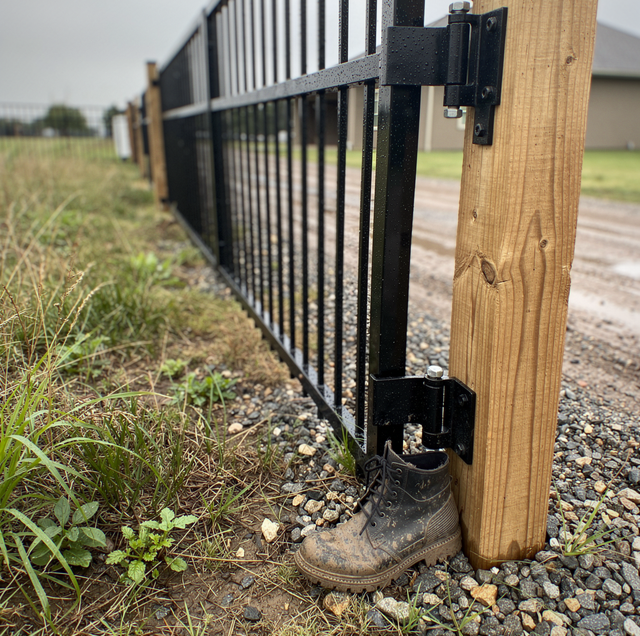
Rain is coming in sideways across the field, and you are standing at the end of a long gravel drive in a rubber boot, both hands on a fourteen-foot iron gate that has swollen tight in its hinges. You have opened this gate by hand every night for six years, whatever the weather, because that is simply what a manual gate asks of whoever lives behind it.
Somewhere in that nightly routine is a question most owners never quite work through on purpose: whether a gate that has always opened by hand could open on its own instead, and what it would actually take, in the operator itself and in the power feeding it, to get there safely.
Why Automating an Existing Gate Is Its Own Job
Adding a motor to a gate that has always opened by hand is not a small accessory bolted onto what is already there. The gate itself, its posts, its hinges, its weight, becomes load-bearing hardware for a machine, and that machine has to be matched to exactly what is standing on the property you already own, not to a generic listing for "a driveway gate operator." That is why a manual-to-automatic conversion gets treated as its own assessment, a separate job from anything already on the gate.
The other thing that changes is motion. A gate you push by hand moves only when someone is pushing it, and it stops the moment that person lets go. An automated gate moves on a motor's schedule and with a motor's force, whether or not anyone is standing nearby to see it happen.
A gate leaf under motor power can trap a person, a pet, or a vehicle against a post, so your installer specifies, mounts, and tests the entrapment sensors that stop it before it happens.
How Gate Weight and Length Determine Operator Size
Gate operators are built in classes, and the class that fits a given gate comes down to two physical facts about that gate: how much the leaf weighs and how long it is from hinge to latch post. Length matters as much as weight, because a longer leaf swinging or sliding through the same arc puts more strain on the operator's arm or drive than a shorter, lighter one ever would.
That is also where one manufacturer's published spec helps make the sizing concrete. US Automatic's Ranger HD, built for a wide swing or slide gate, lists 580 pounds of Dynamic Thrust and a static hold load rating of roughly 4,000 pounds, numbers meant for a gate that is heavy or long, not a light picket gate swinging through an arc. A lighter gate on that same unit sits oversized; a heavy gate on an undersized one strains and stalls partway through its swing. Wind exposure and daily cycle count push the sizing decision toward the sturdier class.
You will not get an accurate size from a phone call or a photo. The gate gets weighed and measured where it stands, sized to what is actually there rather than to an average pulled from a catalog page.
Hardwired Power, Solar, and Battery Backup Compared
A gate close to an existing electrical run is usually the easiest case: hardwired power provides the operator with a constant, uninterrupted supply and tends to be a simpler install when the distance from the house or the meter is short. Once that distance stretches down a long rural driveway, running new wire the whole way gets expensive and disruptive fast, which is where a self-contained solar setup earns its place instead of trenching a new circuit across the property.
Either power source can pair with a battery backup, which is really the second half of the outage question. Battery backup, instead of a gate that simply stops working the moment a storm knocks the power out, means the gate keeps functioning through the outage itself, on whichever power source is feeding it day to day. That backup capacity and how the operator is expected to behave the moment the power actually returns are confirmed in the same estimate that covers gate weight, length, and operator class.
What Binds a Retrofit to a Site Visit?
What binds a manual-to-automatic conversion to an in-person visit is that weight and length are half of what a working retrofit depends on. The posts, the hinges, and the ground the gate travels over have to be sound enough for motorized use, and none of that shows up in a phone estimate.
A site visit catches what a spec sheet cannot: a post leaning under the gate's own weight, a hinge with enough play to wear faster once a motor pushes and pulls it daily, or a slope a hand-pushed gate clears but a motor-driven one would just catch instead.
What Your Installer Checks That You Cannot
Weight, length, and power source can all be worked out on paper once someone has actually measured the gate, but a few things about an existing gate only surface once a trained eye is standing in front of it. Most owners, you included, have lived with their gate for years without ever weighing the leaf, timing its swing, or checking how square the posts still stand. A well-built gate still drifts a little every year, too small to really notice.
An installer walks the hinge side for play and wobble, checks post lean with a level, not by eye, and translates how often the gate is expected to cycle in a day into the duty-cycle rating an operator actually needs to hold up under daily use. Ground clearance along the full travel path gets checked too, since a gate that clears its own arc by an inch when pushed by hand can catch or drag once a motor is driving it at a steadier, less forgiving pace, a margin owners rarely have reason to measure.
That inspection is what turns a general operator class into a specific piece of equipment ordered for one particular gate. Automating a gate that has swung by hand for years has less to do with buying a stronger motor than with matching that motor's power to hardware nobody in the house has ever actually measured. None of that shows up from the driveway; it shows up once someone measures, weighs, and walks the hardware in person.
Frequently Asked Questions
Not automatically. A leaning post, a rotted panel, or a gate that no longer swings true usually needs repair first, and your installer flags that during the estimate so you are not paying to automate hardware that would fight the operator.
A phone description or a photo of your gate can be off by a wide enough margin to matter, so an installer typically weighs the leaf directly, measures its swing or slide arc, and confirms the numbers with you in person before writing your quote.
Yes; most residential operators include a manual release or disconnect lever built into the housing, separate from control wiring, so you or your installer can free the gate from the motor and swing or slide it by hand during an outage or while your installer is servicing it.
A hardwired operator with no battery backup at the property typically stops your gate wherever it is in its swing when power drops, holding that spot until power returns, while a battery-backed unit usually finishes the movement already underway and even keeps answering your controls the moment you use them again.
No; solar changes how power reaches the operator, not the mechanical thrust rating tied to the gate's weight and length, which stays the same regardless of the power source you choose. What solar adds to the estimate is a check on sun exposure, since shade most days will not keep pace with your gate's cycling.
After your site visit, ordering the sized operator and any solar or battery components takes some lead time, and the installation- mounting the operator, running or connecting power, and testing the swing or slide- is often finished in a single visit once the parts are on hand. An older gate with a leaning post or worn hinges may need that fixed first, which can add a separate visit before your automation begins, so the timeline tracks your gate's condition, not the install.
Schedule a free, in-person estimate to automate your existing gate — so your installer can confirm the operator size and the power setup the gate requires before any work starts on your property. Arnold's Garage Door & Gates serves Fort Worth, Alvarado, and the DFW metroplex. Call Arnold: 682-337-7220.
